

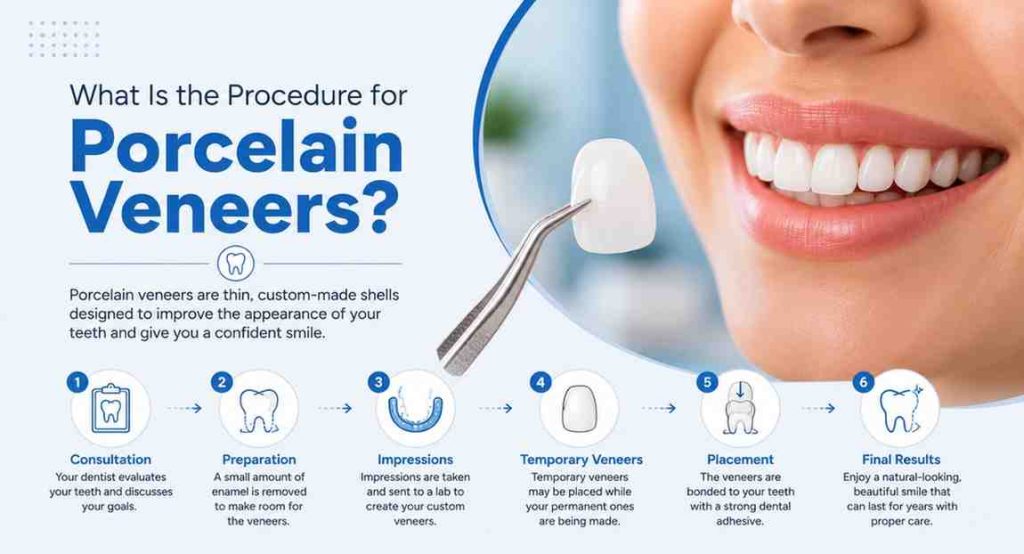
Porcelain veneers provide a popular cosmetic solution for improving tooth shape, color, size, and overall smile appearance. These thin ceramic shells attach to the front surfaces of teeth to create a more balanced and attractive look. However, many people remain unsure about the actual procedure involved before veneers become permanently bonded. The process includes careful planning, enamel preparation, impressions, temporary restorations, and final placement. Consequently, patients should know what to expect during each stage before beginning treatment. Proper preparation, realistic expectations, and ongoing maintenance all contribute to successful porcelain veneer results and long-lasting smile enhancement.
Table of Contents
ToggleWhat Are Porcelain Veneers?
Porcelain veneers are thin ceramic coverings custom-made to fit over the visible front surfaces of teeth. Dentists use them to improve cosmetic concerns involving color, shape, spacing, or minor alignment irregularities.
Veneers commonly address:
- Discolored teeth
- Small gaps
- Chipped teeth
- Uneven tooth shapes
- Minor cracks
- Worn enamel
- Mild misalignment
Porcelain closely resembles natural enamel because it reflects light similarly. Consequently, veneers often create highly natural-looking cosmetic improvements.
Unlike removable dental appliances, veneers bond permanently to prepared teeth. Therefore, patients should carefully evaluate the procedure before committing to treatment.
Initial Consultation and Smile Evaluation
The veneer process begins with a consultation focused on oral health, cosmetic goals, and treatment suitability. Consequently, this stage helps determine whether veneers represent the best option for the patient’s needs.
Examining Oral Health Conditions
Dentists examine teeth, gums, and bite alignment carefully before recommending veneers. Existing problems, such as cavities or gum disease, usually require treatment first because unhealthy teeth may compromise veneer success later.
Several factors influence candidacy:
- Gum health
- Tooth strength
- Enamel thickness
- Bite pressure
- Teeth grinding habits
- Existing restorations
Healthy oral structures provide a stronger foundation for cosmetic treatment.
Discussing Cosmetic Goals
Patients often discuss concerns involving tooth color, symmetry, spacing, or smile balance during the consultation. Consequently, dentists can recommend realistic improvements that support facial harmony and natural appearance.
Photographs, digital imaging, or wax models may assist treatment planning. Moreover, detailed discussions help establish clear expectations before preparation begins.
Treatment Planning and Shade Selection
Careful planning remains one of the most important steps in successful veneer treatment because appearance, symmetry, and fit all require precision.
Choosing the Correct Shade
Veneer color should complement facial features, gum tone, and surrounding teeth naturally. Consequently, extremely bright shades may appear unnatural in some situations.
Several factors affect shade selection:
- Skin tone
- Existing tooth color
- Desired brightness
- Smile symmetry
- Lighting conditions
Patients considering whitening often complete that treatment before veneer shade selection begins.
Deciding How Many Veneers Are Needed
Some individuals receive a single veneer, whereas others choose multiple veneers for better symmetry. Consequently, treatment plans vary depending on cosmetic goals and visible tooth areas during smiling.
Balanced planning helps create a more natural and proportionate final appearance.
Tooth Preparation for Veneers
Tooth preparation allows veneers to fit naturally without appearing bulky or oversized. Consequently, dentists remove a thin layer of enamel from the front surface of treated teeth.
Why Enamel Removal Is Necessary
Minimal enamel reduction creates space for the porcelain shell while preserving natural tooth structure. Consequently, veneers blend more smoothly with neighboring teeth after bonding.
Preparation usually involves removing less enamel than crown procedures require. However, veneer treatment still permanently changes the tooth structure.
Local Anesthesia During Preparation
Many patients receive local anesthesia during enamel removal for improved comfort. However, some individuals with minimal preparation needs may require little or no anesthetic depending on sensitivity levels.
Dentists shape the teeth carefully to support strong veneer placement and natural appearance.
Precision Matters During This Stage
Preparation affects fit, bite alignment, and final aesthetics significantly. Consequently, careful shaping helps avoid bulky veneers or uneven contours after placement.
Modern techniques often allow highly conservative enamel removal while preserving tooth strength.
Dental Impressions and Digital Scanning
After tooth preparation, dentists capture detailed impressions or digital scans of the teeth. These records help laboratories create customized veneers that match the patient’s smile precisely.
Traditional Impressions
Traditional impressions use soft molding material placed around the prepared teeth. Consequently, the material captures detailed tooth contours and bite alignment.
Laboratories use these molds to fabricate custom porcelain veneers with accurate dimensions.
Digital Scanning Technology
Some dental practices use digital scanners instead of physical impressions. Digital systems create highly detailed three-dimensional images of the teeth and gums.
Digital scanning may improve:
- Precision
- Patient comfort
- Treatment efficiency
- Laboratory communication
Regardless of the method used, accurate records remain essential for proper veneer fit and aesthetics.
Temporary Veneers During Fabrication
Permanent veneers usually require laboratory fabrication, which may take several days or weeks. Consequently, temporary veneers often protect prepared teeth during this waiting period.
Purpose of Temporary Veneers
Temporary veneers help:
- Protect sensitive teeth
- Improve appearance temporarily
- Maintain spacing
- Reduce discomfort
Prepared teeth may feel sensitive to temperature changes without temporary coverage.
Caring for Temporary Veneers
Temporary restorations remain less durable than permanent porcelain veneers. Therefore, patients should avoid excessive pressure or sticky foods during this stage.
Helpful precautions include:
- Avoiding hard foods
- Brushing gently
- Limiting sticky snacks
- Flossing carefully
Temporary veneers may feel slightly different from final restorations because laboratories still create the permanent versions.
Laboratory Fabrication of Porcelain Veneers
Dental laboratories create porcelain veneers using detailed impressions, digital scans, and cosmetic instructions from the dentist.
Custom Craftsmanship Matters
Technicians carefully design veneers to match natural tooth characteristics, including:
- Shape
- Color
- Texture
- Transparency
- Size
Consequently, skilled craftsmanship plays a major role in achieving natural-looking results.
Porcelain Offers Several Advantages
Porcelain remains highly popular because it provides:
- Natural appearance
- Stain resistance
- Durability
- Light reflection similar to enamel
Unlike some composite materials, porcelain often maintains color stability for longer periods.
Veneer Placement and Bonding Procedure
Once the veneers arrive from the laboratory, the dentist begins the bonding process. Consequently, this appointment focuses on fit, aesthetics, and permanent attachment.
Checking Fit and Appearance
Before bonding, dentists place the veneers temporarily to evaluate:
- Shape
- Bite alignment
- Shade match
- Overall appearance
Patients may review the smile carefully during this stage. Minor adjustments sometimes occur before permanent bonding begins.
Preparing Teeth for Bonding
Dentists clean and etch the prepared teeth using special solutions that improve bonding strength. Consequently, the veneer adheres more securely to the enamel surface.
Strong bonding remains essential for long-term durability and stability.
Cementing the Veneers
Special dental cement attaches each veneer permanently to the tooth. Dentists position the veneers carefully before using curing lights to harden the bonding material.
Excess cement is removed afterward to improve comfort and appearance. Consequently, final polishing creates smoother edges and a natural finish.
Bite Adjustments After Placement
Even small bite irregularities may create discomfort or excessive pressure after veneer placement. Therefore, dentists evaluate bite alignment carefully during the final appointment.
Patients may bite down on marking paper so the dentist can identify uneven contact areas. Consequently, small adjustments help improve comfort and protect the veneers from unnecessary stress.
Proper bite balance helps reduce risks involving:
- Chipping
- Cracking
- Uneven wear
- Jaw discomfort
Follow-up appointments may also occur if additional adjustments become necessary after adaptation.
Recovery and Adjustment Period
Most patients adjust to porcelain veneers within several days or weeks. However, temporary sensitivity or mild discomfort may occur initially.
Normal Early Sensations
Patients may notice:
- Mild sensitivity
- Slight bite awareness
- Pressure changes
- Increased attention to tooth texture
These sensations usually improve as the mouth adapts to the veneers.
Eating and Speaking Adjustments
Most people return to normal speaking and eating habits quickly. However, avoiding extremely hard foods initially may help reduce unnecessary pressure during adaptation.
Consequently, careful habits support smoother adjustment after placement.
Caring for Porcelain Veneers
Good maintenance helps preserve the veneer’s appearance and durability for many years. Consequently, oral hygiene remains extremely important after treatment.
Daily Oral Hygiene Habits
Patients should continue:
- Brushing twice daily
- Flossing carefully
- Using nonabrasive toothpaste
- Scheduling dental cleanings
Although porcelain resists staining well, surrounding natural teeth may still discolor over time.
Avoiding Excessive Force
Veneers remain durable, yet they can still chip under extreme pressure. Therefore, patients should avoid:
- Chewing ice
- Biting hard objects
- Opening packages with teeth
- Nail biting
Protective night guards may also help patients who grind their teeth during sleep.
Potential Risks and Limitations
Although porcelain veneers provide strong cosmetic benefits, every dental procedure carries limitations and potential risks.
Tooth Sensitivity
Enamel removal may increase temporary sensitivity after preparation or bonding. However, symptoms usually improve over time.
Irreversible Tooth Changes
Because dentists remove enamel during preparation, veneer treatment remains irreversible. Consequently, prepared teeth usually require ongoing restoration coverage permanently.
Possible Damage Over Time
Although durable, veneers may eventually chip, loosen, or wear after many years. Consequently, replacement may become necessary later, depending on oral habits and maintenance quality.
Who Makes a Good Candidate for Veneers?
Not every person qualifies immediately for veneer treatment. Consequently, dentists evaluate several factors before approving cosmetic procedures.
Good candidates often have:
- Healthy gums
- Sufficient enamel
- Good oral hygiene
- Realistic expectations
- Mild cosmetic concerns
Patients with severe decay, active gum disease, or heavy grinding habits may require additional treatment first.
A dentist in Florham Park NJ, may recommend orthodontic treatment or restorative care before veneers if structural concerns affect long-term success.
Comparing Veneers With Other Cosmetic Options
Patients often compare veneers with whitening, bonding, or orthodontic treatment before deciding on cosmetic care.
Veneers vs Teeth Whitening
Whitening improves tooth color but cannot reshape teeth or close gaps significantly. In contrast, veneers address multiple cosmetic concerns simultaneously.
Veneers vs Dental Bonding
Bonding generally costs less initially and requires less enamel removal. However, porcelain veneers usually resist staining and wear more effectively over time.
Veneers vs Orthodontics
Orthodontic treatment changes the actual tooth position, whereas veneers improve appearance primarily through cosmetic reshaping. Consequently, treatment goals influence the most appropriate option.
Long-Term Longevity of Porcelain Veneers
Porcelain veneers often last many years with proper care and maintenance. However, longevity depends heavily on oral hygiene habits, bite pressure, and lifestyle choices.
Several factors support longer veneer lifespan:
- Consistent brushing
- Professional cleanings
- Avoiding tobacco
- Wearing night guards when necessary
- Avoiding hard object chewing
Regular dental examinations help identify early wear or bonding concerns before larger problems develop.
Patients who neglect oral hygiene may still experience decay around veneer edges despite the porcelain coverage itself remaining intact.
Emotional and Social Benefits of Veneers
Smile appearance often affects confidence, communication, and social comfort. Consequently, cosmetic improvements may influence emotional well-being positively for many individuals.
People frequently seek veneers to improve concerns involving:
- Stained teeth
- Uneven smiles
- Visible chips
- Small gaps
- Worn enamel
Professional and social interactions sometimes feel easier when patients feel more confident about their smiles. However, realistic expectations remain extremely important because veneers enhance appearance but cannot create perfection.
Balanced cosmetic goals generally lead to greater long-term satisfaction after treatment.
Conclusion
Porcelain veneers involve a detailed cosmetic process focused on improving smile appearance through carefully crafted ceramic restorations. The procedure includes consultation, planning, enamel preparation, impressions, temporary coverage, and permanent bonding. Consequently, each stage plays an important role in achieving natural-looking and durable results. Proper oral hygiene, realistic expectations, and routine dental care remain essential after treatment completion. Although veneers offer significant cosmetic benefits, long-term success depends heavily on maintenance and healthy daily habits. Patients who follow professional recommendations carefully often achieve improved confidence, balanced smile aesthetics, and long-lasting satisfaction with their porcelain veneer results.
FAQs
1. How long does the porcelain veneer procedure usually take?
The veneer process commonly requires multiple appointments spread across several weeks. Initial consultation, tooth preparation, impressions, temporary veneers, and final bonding all occur during separate stages. Consequently, treatment timelines vary depending on laboratory fabrication speed, treatment complexity, and the number of veneers receiving placement during cosmetic care.
2. Does getting porcelain veneers hurt?
Most patients experience minimal discomfort because local anesthesia often helps during enamel preparation. Mild sensitivity may occur temporarily after treatment, especially with hot or cold foods. However, discomfort usually improves within several days. Dentists also monitor bite alignment carefully to reduce irritation and support comfortable adjustment afterward.
3. Are porcelain veneers permanent?
Yes, veneers remain considered permanent because dentists remove a thin layer of enamel during preparation. Consequently, treated teeth generally require continued restoration coverage afterward. Although veneers may eventually need replacement because of wear or damage, the prepared teeth cannot return completely to their original, untreated condition later.
4. Can porcelain veneers stain over time?
Porcelain resists staining better than natural enamel and many composite materials. However, surrounding natural teeth may still discolor gradually because of food, beverages, or tobacco use. Consequently, maintaining good oral hygiene and limiting exposure to strong staining substances helps preserve cosmetic consistency and brightness for longer periods.
5. How should people care for porcelain veneers daily?
Patients should brush twice daily, floss carefully, and attend regular dental cleanings to maintain veneer health. Nonabrasive toothpaste helps protect polished surfaces from unnecessary wear. Moreover, avoiding chewing hard objects reduces chipping risks. Proper hygiene also prevents decay and gum disease around veneer margins and surrounding teeth.
6. Can veneers fix crooked teeth completely?
Veneers may improve the appearance of mildly uneven teeth by reshaping visible surfaces. However, severe alignment problems often require orthodontic treatment instead. Consequently, dentists evaluate bite function, tooth position, and cosmetic goals carefully before recommending veneers as the most appropriate treatment solution for alignment-related concerns or irregularities.
7. What happens if a veneer breaks or chips?
Damaged veneers may require repair or replacement, depending on the severity of the problem. Small chips occasionally receive polishing or bonding correction. However, larger fractures often need replacement restorations. Consequently, avoiding excessive pressure and maintaining routine dental evaluations helps reduce damage risks significantly over time.
8. Are temporary veneers necessary during treatment?
Temporary veneers commonly protect prepared teeth while laboratories create permanent restorations. Consequently, they help reduce sensitivity, improve appearance, and maintain spacing during the waiting period. Although temporary veneers remain less durable than final porcelain restorations, they provide important protection and cosmetic support before permanent bonding occurs.
9. How long do porcelain veneers usually last?
Porcelain veneers may last many years when patients maintain strong oral hygiene and avoid damaging habits. Longevity depends on bite pressure, enamel condition, nightly grinding, and daily care routines. Consequently, regular dental examinations and protective habits often improve durability and reduce the likelihood of premature replacement or repair.
10. Can people whiten porcelain veneers later?
Whitening products do not change porcelain color after placement. Consequently, patients should ideally complete whitening procedures before veneer shade selection begins. If surrounding teeth become darker over time, cosmetic adjustments or replacement veneers may eventually become necessary to maintain a consistent appearance and smile balance between natural teeth and restorations.