

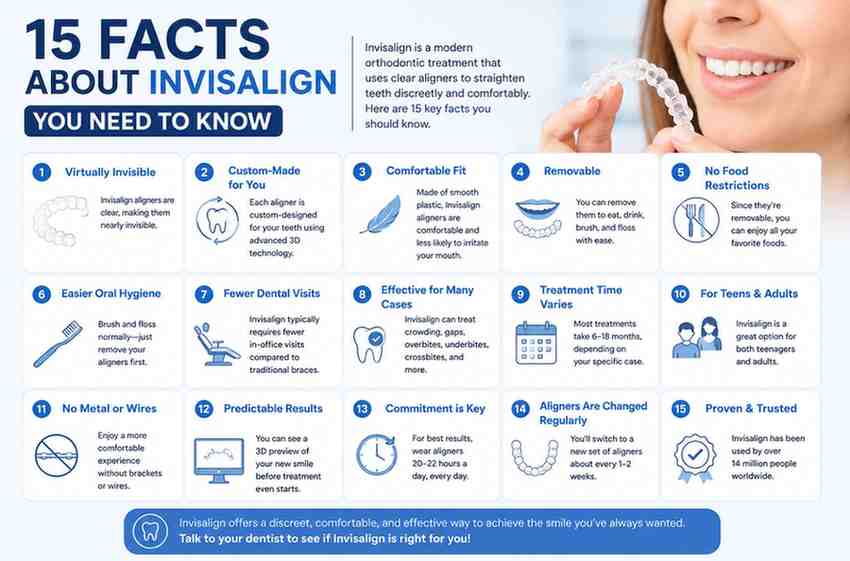
Invisalign treatment has changed the way many people approach orthodontic care by offering a more discreet alternative to traditional braces. However, clear aligners involve more than simply wearing transparent trays. Treatment success depends on consistency, oral hygiene, lifestyle habits, and realistic expectations. Consequently, patients should examine several important details before beginning aligner therapy. Some individuals benefit greatly from removable aligners, whereas others may require different orthodontic solutions. Knowing how Invisalign works, what challenges may appear, and how maintenance affects results can help patients make more confident and informed decisions about their smile alignment goals.
Table of Contents
ToggleFact One: Invisalign Uses Custom-Made Clear Aligners
Invisalign treatment relies on a series of custom plastic aligners designed specifically for each patient’s teeth. Digital scans or impressions help create trays that gradually shift teeth into new positions.
Each aligner applies controlled pressure to specific teeth. Consequently, movement occurs step by step rather than all at once. Patients switch to new trays regularly according to the treatment schedule provided by the dental professional.
Unlike traditional braces, Invisalign aligners remain removable. Therefore, patients can take them out during meals and oral hygiene routines. This flexibility often improves convenience and comfort during treatment.
Fact Two: Treatment Requires Consistent Wear
Many people assume removable aligners offer complete freedom. However, Invisalign treatment only works properly when patients wear the trays consistently.
Most providers recommend wearing aligners for twenty to twenty-two hours each day. Consequently, removing them too frequently may delay tooth movement and extend treatment time.
Important wear habits include:
- Wearing trays during sleep
- Reinserting aligners after meals
- Following tray schedules carefully
- Avoiding unnecessary removal
- Keeping trays clean
Discipline plays a major role in treatment success. In contrast, inconsistent use may compromise final results significantly.
Fact Three: Invisalign Can Treat Many Orthodontic Problems
Clear aligners can address more than minor cosmetic concerns. Consequently, many orthodontic conditions now respond successfully to Invisalign treatment.
Commonly treated issues include:
- Crowded teeth
- Gaps between teeth
- Overbites
- Underbites
- Crossbites
- Mild tooth rotation
However, severe orthodontic conditions may still require traditional braces or more advanced procedures. Therefore, professional evaluation remains essential before beginning treatment.
Technological improvements continue to expand the range of cases suitable for aligners. Nevertheless, complexity still influences treatment effectiveness and duration.
Fact Four: Attachments May Be Necessary
Some patients feel surprised when they notice small, tooth-colored bumps attached to their teeth during Invisalign treatment. These attachments help aligners grip teeth more effectively.
Why Attachments Matter?
Attachments improve control over tooth movement. Consequently, they help aligners perform more complex adjustments that trays alone may struggle to achieve.
Dental professionals bond these small shapes temporarily onto specific teeth during treatment.
Attachments Remain Subtle
Although attachments create slight texture changes, they usually blend closely with natural enamel color. Therefore, most people notice them far less than traditional brackets.
Patients may feel mild roughness initially. However, the mouth typically adjusts within several days.
Fact Five: Invisalign Aligners Require Careful Cleaning
Aligners stay inside the mouth for most of the day, so proper cleaning remains essential for hygiene and appearance.
Dirty Aligners Can Create Problems
Neglecting aligner cleaning may lead to:
- Unpleasant odors
- Bacterial buildup
- Staining
- Cloudy appearance
- Increased plaque accumulation
Consequently, patients should clean aligners consistently every day.
Safe Cleaning Habits Matter
Helpful cleaning methods include:
- Rinsing trays after removal
- Brushing gently with soft tools
- Using approved cleaning crystals
- Avoiding hot water
- Storing trays properly
Hot water may warp aligners and affect fit. Therefore, only lukewarm or cool water should contact the trays during cleaning.
Fact Six: Invisalign Usually Causes Less Irritation Than Braces
Traditional braces sometimes irritate cheeks and lips because of wires and brackets. In contrast, Invisalign trays feature smooth plastic edges that reduce friction inside the mouth.
Many patients experience greater comfort with aligners during sports, speaking, and daily activities. However, mild pressure still occurs whenever trays change because teeth continue shifting gradually.
Temporary discomfort often appears during the first few days of each new aligner stage. Consequently, mild soreness usually signals active tooth movement rather than treatment failure.
Orthodontic wax rarely becomes necessary with aligners because sharp hardware does not exist. Moreover, fewer emergency visits occur because no wires break or brackets detach during routine activities.
Fact Seven: Eating Requires Tray Removal
Patients must remove Invisalign aligners before eating or drinking anything except water. Consequently, treatment involves more planning than some people initially expect.
Why Removal Is Necessary?
Eating while wearing aligners may cause:
- Cracking
- Staining
- Warping
- Bacterial buildup
Chewing pressure can damage trays quickly. Therefore, aligners should always be safely stored during meals.
Oral Hygiene After Meals Is Important
Patients should brush or rinse before reinserting aligners whenever possible. Food particles trapped between trays and teeth may increase cavity risk and unpleasant odors.
Consistent hygiene supports healthier teeth and clearer aligners throughout treatment.
Fact Eight: Invisalign Treatment Time Varies
Treatment length depends on tooth movement complexity, patient compliance, and oral health. Consequently, no single timeline applies to every individual.
Mild cases may finish within several months, whereas complex corrections can take much longer. Factors affecting duration include:
- Severity of crowding
- Bite correction needs
- Tray wear consistency
- Missed appointments
- Oral hygiene habits
Patients who wear aligners inconsistently often experience slower progress. In contrast, disciplined wear supports more predictable movement and timely completion.
Fact Nine: Invisalign May Affect Speech Temporarily
Some patients notice slight speech changes when first wearing aligners. However, these effects usually improve quickly as the tongue adapts to the trays.
Common temporary speech issues include:
- Minor lisping
- Difficulty pronouncing certain sounds
- Increased saliva production
Reading aloud and speaking regularly often accelerate adjustment. Consequently, most patients regain normal speech patterns within several days.
Professional and social communication generally becomes easier once adaptation occurs because aligners remain far less visible than braces.
Fact Ten: Retainers Remain Necessary After Treatment
Completing Invisalign treatment does not permanently lock teeth into place. Consequently, retainers play a critical role after active alignment ends.
Teeth naturally shift over time because of aging, chewing forces, and jaw pressure. Without retainers, alignment relapse may occur gradually.
Common Retainer Options
Post-treatment retainers may include:
- Clear removable retainers
- Bonded permanent retainers
- Hawley retainers
Dental professionals recommend retainer schedules based on each patient’s case and stability.
Consistency Prevents Relapse
Neglecting retainer wear may reverse months or years of orthodontic progress. Therefore, long-term maintenance remains essential even after aligner treatment finishes.
Fact Eleven: Invisalign Often Improves Oral Hygiene Access
Braces can make brushing and flossing difficult because wires block access between teeth. In contrast, Invisalign aligners remain removable during oral hygiene routines.
Consequently, many patients find it easier to maintain:
- Daily flossing
- Thorough brushing
- Gum health
- Cleaner tooth surfaces
However, aligners still require commitment to hygiene because trapped bacteria may increase cavity risk if teeth remain unclean before tray insertion.
Regular dental checkups also remain important throughout treatment. Professional cleanings help remove plaque and monitor oral health changes during alignment.
Fact Twelve: Invisalign Costs Vary Significantly
Treatment costs depend on multiple factors, including case complexity, treatment duration, geographic location, and provider experience.
Several elements influence pricing:
- Number of aligners required
- Orthodontic difficulty
- Follow-up visits
- Refinement trays
- Retainer needs
Some patients assume aligners always cost more than braces. However, pricing often overlaps depending on treatment requirements.
Insurance plans may partially cover orthodontic treatment in certain cases. Moreover, payment plans often help patients manage costs more comfortably.
A dentist in Florham Park NJ, may discuss available options after evaluating alignment needs and oral health conditions.
Fact Thirteen: Invisalign Works Best With Patient Discipline
Invisalign depends heavily on personal responsibility because trays remain removable. Consequently, treatment success requires consistent habits and daily commitment.
Patients who frequently forget aligners or leave them out for long periods may experience:
- Delayed tooth movement
- Poor fit
- Extended treatment time
- Reduced effectiveness
Teenagers and adults capable of maintaining routines often perform well with aligner treatment. In contrast, less disciplined patients may benefit more from fixed orthodontic appliances.
Tracking wear time and following provider instructions carefully improves overall outcomes significantly.
Fact Fourteen: Some Discomfort Is Normal
Although Invisalign generally feels more comfortable than braces, mild soreness remains a normal part of tooth movement.
Pressure usually increases during the first days of a new tray stage. Consequently, patients may experience temporary tenderness while chewing or biting.
Several tips may reduce discomfort:
- Switching trays before bedtime
- Eating softer foods temporarily
- Drinking cool water
- Wearing aligners consistently
Removing trays too often may actually prolong soreness because teeth repeatedly readjust. Therefore, consistent wear often improves comfort more effectively.
Severe pain, swelling, or tray fit problems should still receive professional evaluation promptly.
Fact Fifteen: Invisalign Requires Regular Monitoring
Even though Invisalign uses removable trays, professional supervision remains extremely important throughout treatment.
Regular appointments help providers:
- Monitor tooth movement
- Evaluate aligner fit
- Make adjustments
- Identify complications
- Plan refinements
Skipping appointments may delay progress or allow unnoticed issues to worsen. Consequently, consistent monitoring supports safer and more accurate alignment correction.
Some patients also require refinement trays after the original treatment plan ends. Refinements address small remaining adjustments needed for optimal results.
Lifestyle Adjustments During Invisalign Treatment
Aligner treatment often influences daily routines more than patients initially expect. Consequently, successful treatment usually requires several lifestyle adjustments.
Important routine changes may include:
- Carrying aligner cases regularly
- Brushing after meals
- Planning snack times carefully
- Monitoring beverage choices
- Cleaning trays consistently
Frequent snacking may become inconvenient because aligners require removal before eating. Therefore, many patients naturally reduce unnecessary snacking during treatment.
Travel also requires preparation. Patients should carry cleaning supplies, extra trays if instructed, and storage cases to maintain hygiene away from home.
Despite these adjustments, many people appreciate the flexibility aligners provide compared with traditional braces.
Conclusion
Invisalign offers a flexible and discreet orthodontic option for many patients seeking improved alignment and bite function. However, successful treatment depends heavily on discipline, proper hygiene, regular monitoring, and realistic expectations. Clear aligners can correct numerous orthodontic concerns, although complex cases may still require alternative approaches. Consequently, professional evaluation remains essential before beginning treatment. Consistent tray wear, careful cleaning, and retainer use all contribute to lasting results after alignment correction finishes. Patients who commit fully to the process often achieve healthier smiles, improved confidence, and better long-term oral function through properly managed Invisalign treatment.
FAQs
1. How many hours each day should Invisalign aligners remain in place?
Most providers recommend wearing Invisalign aligners for twenty to twenty-two hours daily. Consequently, patients should remove them only for meals, beverages other than water, and oral hygiene routines. Consistent wear supports effective tooth movement and helps prevent unnecessary treatment delays or poor aligner fit problems during therapy.
2. Does Invisalign treatment hurt?
Invisalign may cause temporary pressure or mild soreness, especially when patients switch to new trays. However, most discomfort remains manageable and short-lived. Smooth plastic trays also reduce cheek and lip irritation compared with traditional braces. Consistent aligner wear often helps the mouth adapt more comfortably throughout treatment.
3. Can Invisalign fix severe orthodontic problems?
Invisalign can correct many alignment and bite issues successfully. However, extremely severe cases may still require braces or additional orthodontic procedures. Consequently, professional evaluation determines whether aligners can provide safe and effective correction for specific tooth movement needs and overall bite complexity before treatment begins.
4. Why must aligners remain removed during meals?
Eating while wearing aligners may crack, stain, or warp the trays. Moreover, trapped food particles can increase bacterial buildup and cavity risk. Consequently, patients should always remove aligners before meals and clean their teeth carefully before reinserting trays to maintain hygiene and treatment effectiveness properly.
5. How should Invisalign trays be cleaned safely?
Patients should rinse aligners regularly and clean them gently using approved cleaning products or mild soap. Hot water should be avoided because heat may warp the trays. Consequently, careful cleaning helps prevent odors, staining, bacteria buildup, and cloudiness while preserving proper aligner fit during orthodontic treatment.
6. Can Invisalign affect speech?
Some patients notice temporary speech changes, including slight lisping, during the first days of treatment. However, the tongue usually adapts quickly to the trays. Speaking regularly and reading aloud often improve adjustment speed. Consequently, most individuals regain comfortable speech patterns within a relatively short period.
7. Are retainers necessary after Invisalign treatment ends?
Yes, retainers remain extremely important after treatment because teeth naturally shift over time. Consequently, failing to wear retainers may allow alignment relapse and reverse orthodontic progress gradually. Dental professionals recommend specific retainer schedules to help maintain long-term tooth position and preserve treatment results successfully after completion.
8. Does Invisalign cost more than braces?
Treatment costs vary depending on case complexity, duration, provider experience, and geographic location. Invisalign sometimes costs more than traditional braces, although pricing often overlaps significantly. Consequently, professional consultation helps patients compare treatment options accurately and evaluate payment plans, insurance coverage, and long-term orthodontic needs more effectively.
9. Can patients drink coffee while wearing aligners?
Patients should remove aligners before drinking coffee because dark beverages may stain the trays and increase bacterial buildup. Hot liquids may also warp the plastic material. Consequently, water remains the safest beverage while aligners stay in place throughout daily wear and orthodontic treatment schedules.
10. What happens if aligners are not worn consistently?
Inconsistent wear may delay tooth movement, reduce treatment effectiveness, and create a poor tray fit. Consequently, patients may require additional aligners or extended treatment time to achieve desired results. Following wear instructions carefully remains essential for predictable progress, proper alignment correction, and successful orthodontic outcomes with Invisalign therapy.