

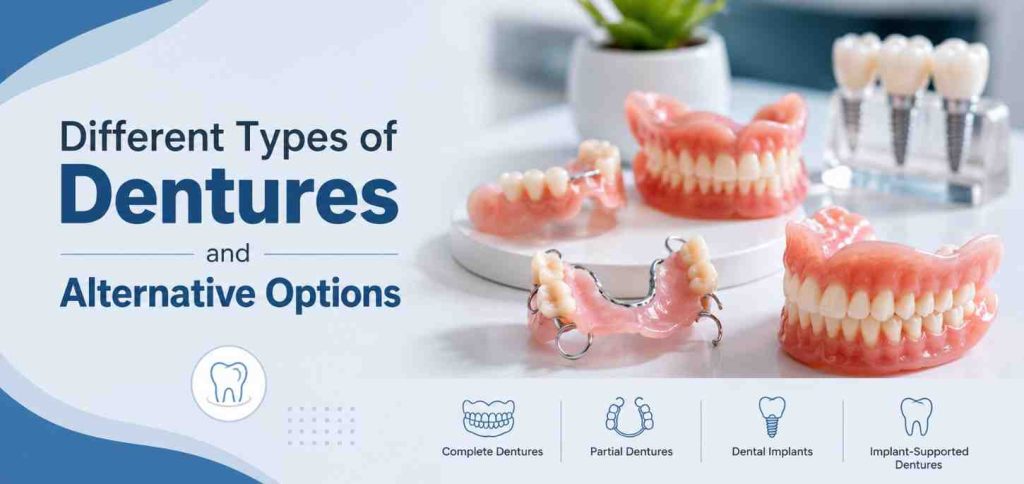
Missing teeth can affect chewing ability, speech clarity, facial appearance, and overall confidence. Fortunately, modern dentistry offers several solutions for replacing missing teeth, including different types of dentures and alternative restorative options. Each treatment provides unique advantages depending on oral health, jaw condition, lifestyle, and financial considerations. Consequently, choosing the right tooth replacement method requires careful evaluation of comfort, stability, maintenance, and long-term goals.
Some patients prefer removable appliances, whereas others seek fixed alternatives for stronger function and convenience. Proper treatment planning and ongoing oral care remain essential for preserving comfort, appearance, and long-term oral health after tooth replacement procedures.
Table of Contents
ToggleWhy Replacing Missing Teeth Matters?
Many people assume that missing teeth affects appearance only. However, tooth loss can influence several aspects of oral function and overall health.
Consequently, untreated tooth loss may contribute to:
- Difficulty chewing
- Speech changes
- Jawbone shrinkage
- Facial sagging
- Tooth shifting
- Bite imbalance
- Gum irritation
Replacing missing teeth helps restore bite stability and supports healthier jaw function. Moreover, proper restoration may improve confidence and social comfort significantly.
Tooth replacement also helps distribute chewing pressure more evenly throughout the mouth. In contrast, untreated gaps may place excessive stress on remaining natural teeth over time.
What Are Dentures?
Dentures are removable appliances designed to replace missing teeth and surrounding tissue structures. Modern dentures use materials that resemble natural gums and teeth more realistically than older designs.
Dentures may restore:
- Chewing ability
- Smile appearance
- Facial support
- Speech clarity
Several denture types exist depending on the number of missing teeth and overall oral condition. Consequently, treatment recommendations vary from patient to patient.
Proper denture fit remains extremely important because loose or poorly fitting appliances may create discomfort and gum irritation.
Full Dentures
Full dentures replace all teeth in either the upper jaw, lower jaw, or both arches simultaneously.
How Full Dentures Work?
These appliances rest directly on the gums and rely on suction, muscle control, and precise fit for stability.
Upper dentures typically achieve stronger suction because of the coverage of the roof of the mouth. In contrast, lower dentures often require greater muscle adaptation because of tongue movement and reduced surface area.
Benefits of Full Dentures
Several advantages include:
- Complete tooth replacement
- Improved facial support
- Non-surgical treatment option
- Lower initial cost compared with implants
Patients missing all teeth often benefit significantly from restored chewing function and appearance.
Challenges With Full Dentures
Some individuals experience:
- Movement during chewing
- Gum soreness
- Speech adjustment difficulties
- Reduced bite force
Consequently, adaptation may require patience and periodic adjustments after placement.
Partial Dentures
Partial dentures replace several missing teeth while preserving the remaining natural teeth.
Structure of Partial Dentures
These appliances often use:
- Artificial replacement teeth
- Acrylic gum-colored base
- Metal or flexible framework
- Clasps for support
Partial dentures attach around remaining teeth for improved retention and stability.
Advantages of Partial Dentures
Partial dentures may help:
- Prevent tooth shifting
- Restore chewing ability
- Improve appearance
- Preserve remaining teeth
Consequently, patients missing several teeth but retaining healthy natural teeth often qualify for partial dentures successfully.
Maintenance Considerations
Patients must remove partial dentures regularly for cleaning and overnight soaking. Proper hygiene also protects remaining teeth from decay and gum disease.
Neglecting cleaning may increase bacterial buildup and oral irritation significantly.
Immediate Dentures
Immediate dentures provide temporary tooth replacement immediately after tooth extraction procedures.
Why are Immediate Dentures Used?
Without immediate dentures, patients may remain without visible teeth during healing periods. Consequently, temporary appliances help maintain appearance and basic oral function after extractions.
Immediate dentures also help protect healing tissues initially.
Adjustment Needs During Healing
Jawbones and gums shrink naturally after extractions. Therefore, immediate dentures often require adjustments, relining, or replacement later as healing progresses.
Temporary fit changes commonly occur during the healing phase.
Implant-Supported Dentures
Implant-supported dentures combine removable dentures with dental implants for improved stability and support.
How do Implant-Supported Dentures Function?
Dental implants placed into the jawbone anchor the denture more securely. Consequently, the appliance moves less during speaking or chewing.
Several attachment systems may secure the denture to implants, depending on treatment design.
Advantages Over Traditional Dentures
Implant-supported dentures may provide:
- Greater chewing strength
- Improved stability
- Reduced slipping
- Better speech clarity
- Increased comfort
Many patients appreciate the stronger retention compared with conventional removable dentures.
Surgical Considerations
Implant placement requires sufficient jawbone support and healing time. Consequently, not every patient qualifies immediately without additional procedures such as bone grafting.
A professional evaluation determines implant suitability carefully.
Flexible Dentures
Flexible dentures use softer materials instead of rigid acrylic bases or metal frameworks.
Comfort and Flexibility
The softer material often adapts more comfortably to gum contours. Consequently, some patients experience fewer sore spots and improved flexibility during wear.
Flexible dentures may also appear more natural because clasps blend better with gum tissue.
Limitations of Flexible Materials
Although flexible dentures provide comfort advantages, they may not suit every case. Some patients require stronger structural support that rigid materials provide more effectively.
Repair and adjustment options may also differ compared with traditional acrylic dentures.
Conventional Dentures vs Implant Alternatives
Many patients compare removable dentures with fixed implant-supported alternatives before making treatment decisions.
Removable Denture Advantages
Traditional dentures often involve:
- Lower upfront cost
- Faster treatment completion
- Non-surgical approach
- Simpler maintenance
Consequently, many individuals choose dentures because they remain accessible and effective for restoring basic oral function.
Implant Alternative Advantages
Dental implants may provide:
- Stronger chewing force
- Improved stability
- Bone preservation
- Fixed tooth replacement
In contrast, implants typically involve higher costs and surgical procedures.
Treatment choice depends heavily on oral health, jawbone condition, lifestyle, and personal preferences.
Dental Bridges as an Alternative Option
Dental bridges represent another tooth replacement solution for patients missing one or several teeth.
How Bridges Work?
Bridges use neighboring teeth or implants for support while suspending artificial teeth across missing spaces.
Several bridge types include:
- Traditional bridges
- Cantilever bridges
- Maryland bridges
- Implant-supported bridges
Benefits of Dental Bridges
Bridges may help restore:
- Bite balance
- Appearance
- Speech
- Chewing ability
Unlike removable dentures, bridges remain fixed in place and cannot be removed by the patient.
Tooth Preparation Requirements
Traditional bridges often require reshaping neighboring teeth for crown placement. Consequently, treatment planning must carefully consider the health and strength of supporting teeth.
Single Tooth Implants
Patients missing only one tooth often consider dental implants instead of partial dentures or bridges.
Implant Structure
Single tooth implants typically involve:
- Titanium implant post
- Connector component
- Custom crown
The implant integrates with jawbone tissue and supports a replacement tooth independently.
Benefits of Single Implants
Implants may help preserve:
- Jawbone density
- Adjacent teeth
- Bite alignment
Consequently, implants often provide long-term stability and natural appearance when oral health conditions support treatment.
The Importance of Jawbone Health
Jawbone condition strongly influences tooth replacement success and treatment options.
Bone Loss After Tooth Loss
Missing teeth allow the jawbone to shrink gradually because chewing stimulation decreases significantly.
Consequently, prolonged tooth loss may lead to:
- Facial sagging
- Denture fit changes
- Reduced implant support
- Bite instability
Early tooth replacement may help reduce bone deterioration over time.
Bone Grafting Procedures
Some patients require bone grafting before implant placement. These procedures rebuild bone volume to improve implant support and long-term stability.
Healing time varies depending on graft size and treatment complexity.
Adapting to New Dentures
New dentures often require an adjustment period before patients feel fully comfortable.
Speaking and Eating Changes
Patients may initially experience:
- Minor speech difficulties
- Increased saliva flow
- Chewing challenges
- Mild gum soreness
Consequently, adaptation usually improves gradually with regular practice and adjustments.
Soft foods often feel easier during the early adjustment phase.
Importance of Follow-Up Visits
Dentists commonly adjust dentures after placement to improve comfort and reduce pressure points. Consequently, follow-up appointments remain important during adaptation.
Ignoring persistent discomfort may worsen irritation or tissue inflammation.
Daily Care and Maintenance
Proper cleaning protects dentures, gums, and remaining natural teeth from infection and damage.
Cleaning Dentures Correctly
Patients should:
- Brush dentures daily
- Rinse after meals
- Soak appliances overnight
- Handle dentures carefully
Using nonabrasive cleaners helps protect denture materials from scratches and wear.
Oral Hygiene Still Matters
Even patients without natural teeth should clean:
- Gums
- Tongue
- Roof of the mouth
Healthy tissues improve comfort and reduce bacterial buildup significantly.
Lifestyle Factors That Influence Treatment Choice
Lifestyle habits often affect which tooth replacement option works best for each individual.
Eating Habits and Function
Patients who prefer a stronger chewing ability may favor implant-supported solutions because they provide greater stability than removable dentures.
Consequently, treatment goals often influence appliance selection significantly.
Budget and Maintenance Considerations
Financial factors also affect decisions because treatment costs vary considerably between dentures, bridges, and implants.
Patients should evaluate:
- Initial treatment cost
- Long-term maintenance
- Repair needs
- Replacement expectations
Balanced planning helps support realistic long-term satisfaction.
Emotional Effects of Tooth Loss and Replacement
Tooth loss often affects emotional well-being alongside physical oral function.
Confidence and Social Comfort
Missing teeth may influence:
- Self-confidence
- Smiling habits
- Speech comfort
- Social interaction
Consequently, tooth replacement often improves emotional comfort and overall quality of life significantly.
Realistic Expectations Matter
Although dentures and alternatives improve oral function and appearance, adaptation requires patience. Consequently, patients should maintain realistic expectations regarding comfort and adjustment during treatment.
Open communication with dental professionals helps address concerns effectively.
Modern Technology and Denture Improvements
Advances in dental materials and digital technology continue to improve denture design and comfort.
Digital Impressions and Precision
Some practices now use digital scanning systems instead of traditional impressions. Consequently, these technologies may improve fit accuracy and patient comfort during treatment planning.
Digital workflows also support more precise fabrication in many situations.
Improved Materials Enhance Appearance
Modern denture materials often provide:
- More natural gum coloration
- Better durability
- Improved stain resistance
- Enhanced comfort
Patients frequently appreciate restorations that resemble natural teeth more closely.
A dentist in Florham Park NJ, may discuss several replacement options depending on jawbone health, missing teeth patterns, and long-term oral goals.
Choosing the Right Tooth Replacement Option
Selecting the best replacement method requires careful evaluation of oral health, lifestyle, finances, and treatment expectations.
Several important factors include:
- Number of missing teeth
- Jawbone condition
- Gum health
- Desired stability
- Budget limitations
- Medical history
- Maintenance preferences
Consequently, individualized treatment planning remains essential for achieving successful long-term outcomes.
No single option works best for every patient. In contrast, customized recommendations help support stronger comfort, function, and satisfaction over time.
Conclusion
Dentures and alternative tooth replacement options provide valuable solutions for restoring oral function, appearance, and confidence after tooth loss. Full dentures, partial dentures, implant-supported restorations, bridges, and dental implants each offer unique advantages depending on oral health and treatment goals. Consequently, choosing the right option requires careful evaluation of stability, comfort, maintenance, and long-term expectations. Proper oral hygiene, regular dental visits, and consistent appliance care remain essential regardless of the restoration selected. Modern dentistry continues to improve restorative materials and techniques, helping patients achieve healthier smiles, improved chewing ability, and greater comfort through personalized tooth replacement treatment plans.
FAQs
1. What is the difference between full and partial dentures?
Full dentures replace all teeth in the upper or lower jaw, whereas partial dentures replace only several missing teeth while preserving the remaining natural teeth. Partial dentures often use clasps for support. Consequently, treatment recommendations depend heavily on how many healthy teeth remain inside the mouth.
2. Are implant-supported dentures more stable than traditional dentures?
Yes, implant-supported dentures usually provide greater stability because dental implants anchor the appliance securely to the jawbone. Consequently, movement during chewing or speaking often decreases significantly. Many patients also experience improved comfort and stronger bite force compared with conventional removable dentures that rely mainly on suction and tissue support.
3. How long does it take to adjust to new dentures?
Adjustment periods vary between individuals, although many patients adapt gradually within several weeks. Early stages may involve speech changes, sore spots, or chewing difficulty. Consequently, follow-up appointments remain important for improving fit and comfort while patients become accustomed to wearing the new dental appliance regularly.
4. Can dentures improve facial appearance?
Yes, dentures often restore facial support lost after tooth removal. Missing teeth may cause cheeks and lips to appear sunken because jawbone volume decreases gradually. Consequently, properly fitted dentures may improve facial balance, smile appearance, and overall confidence by replacing lost support structures inside the mouth effectively.
5. Do dentures need replacement eventually?
Most dentures eventually require replacement or adjustment because the jawbone and gum tissues change over time. Consequently, dentures may become loose, uncomfortable, or less stable gradually. Regular dental examinations help identify fit problems early and support proper maintenance or replacement planning before major complications develop later.
6. Are dental implants better than dentures?
Neither option works best for every patient because treatment needs vary significantly. Implants often provide stronger stability and bone preservation, whereas dentures usually involve lower upfront costs and non-surgical treatment. Consequently, oral health, budget, jawbone condition, and personal preferences all influence the most appropriate replacement choice.
7. How should dentures be cleaned properly?
Patients should brush dentures daily using nonabrasive cleansers and soak them overnight in recommended cleaning solutions. Dentures should also be rinsed after meals to remove debris. Consequently, proper cleaning helps reduce bacteria, odors, staining, and gum irritation while supporting healthier oral tissues and appliance longevity.
8. Can people sleep while wearing dentures?
Most dental professionals recommend removing dentures overnight to allow the gum tissues to rest and recover. Continuous wear may increase irritation and bacterial buildup. Consequently, soaking dentures overnight while cleaning the gums and mouth carefully often supports healthier tissues and improved long-term oral comfort significantly.
9. What foods should denture wearers avoid initially?
New denture wearers should avoid extremely hard, sticky, or chewy foods during early adjustment periods. Soft foods usually feel easier initially while chewing muscles adapt gradually. Consequently, careful eating habits may reduce discomfort, improve confidence, and prevent accidental appliance movement during the adaptation phase.
10. Why does the jawbone shrink after tooth loss?
The jawbone relies on chewing pressure from natural tooth roots for stimulation and maintenance. When teeth disappear, bone tissue gradually shrinks because stimulation decreases significantly. Consequently, prolonged tooth loss may affect denture fit, facial appearance, and implant eligibility unless replacement treatment occurs before severe bone deterioration develops.