

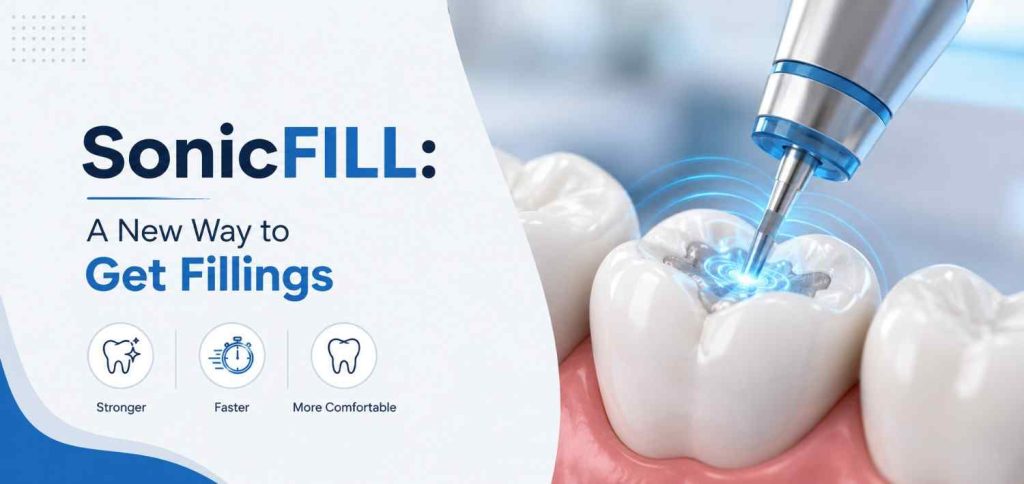
Modern dentistry continues to improve restorative treatments through advanced materials and more efficient techniques. SonicFILL technology represents one of these developments by changing the way dentists place tooth-colored fillings. Unlike traditional composite filling methods that require multiple layering steps, SonicFILL uses sonic energy to improve material flow and placement inside cavities. Consequently, the procedure may reduce treatment time while maintaining strong adaptation and durability.
Patients seeking faster and more comfortable restorative care often show interest in this technology because it combines efficiency with natural-looking cosmetic results. Proper oral care and timely cavity treatment remain essential for protecting long-term tooth health.
Table of Contents
ToggleWhat Is SonicFILL Technology?
SonicFILL is a restorative dental filling system designed to simplify and improve composite filling procedures. It combines specialized composite material with sonic activation technology during placement.
Traditional composite fillings often require multiple thin layers because the material remains relatively thick during placement. In contrast, SonicFILL becomes more flowable when sonic energy activates the material.
Consequently, the filling adapts more effectively to cavity walls and internal tooth structures before hardening.
Several key components define SonicFILL treatment:
- Sonic activation handpiece
- Specialized composite material
- Tooth-colored restoration
- Bulk-fill placement technique
- Light-curing process
The material returns to a firmer consistency once sonic activation stops. Therefore, dentists can shape and sculpt the filling more efficiently afterward.
How Traditional Composite Fillings Work?
To appreciate SonicFILL technology fully, it helps to compare it with standard composite filling methods.
Layering in Conventional Fillings
Traditional composite fillings often require placement in several small increments. Dentists cure each layer separately using a special curing light before adding the next layer.
This layering process helps reduce:
- Shrinkage stress
- Air pockets
- Incomplete curing
- Weak bonding
However, multiple layers may increase treatment time significantly.
Challenges of Conventional Placement
Standard composite materials can feel thicker during placement. Consequently, adapting the material into deep or narrow cavity areas sometimes becomes more difficult.
Dentists must work carefully to avoid trapped air bubbles or incomplete adaptation against cavity walls.
Although traditional fillings remain effective, newer technologies aim to improve efficiency and handling during restorative treatment.
How SonicFILL Works During Treatment?
SonicFILL technology changes the viscosity of the composite material temporarily during placement.
Sonic Energy Activation
The handpiece delivers sonic vibrations that make the filling material more flowable. Consequently, the composite spreads more smoothly into the prepared cavity.
Improved flow helps the material adapt closely to:
- Tooth walls
- Internal grooves
- Deep cavity areas
- Irregular surfaces
This process may reduce gaps or voids inside the restoration.
Return to Firmer Consistency
Once sonic activation stops, the material thickens again. Therefore, the dentist can shape the filling more easily before final curing.
The combination of flowability and sculptability helps improve both adaptation and appearance during restorative procedures.
Light-Curing Finalizes the Restoration
After shaping the material properly, dentists use curing lights to harden the composite filling permanently. Consequently, the restoration becomes strong enough to handle daily chewing forces.
Proper curing remains essential for long-term durability and stability.
Advantages of SonicFILL Fillings
Many dental professionals and patients appreciate SonicFILL because of its potential benefits compared with traditional composite placement methods.
Faster Filling Placement
One major advantage involves reduced treatment time. Because SonicFILL allows bulk placement rather than multiple thin layers, the process may become more efficient.
Consequently, patients often spend less time in the dental chair during restorative appointments.
Improved Adaptation to Tooth Structure
The temporary flowability helps the material spread into small spaces more effectively. Consequently, closer adaptation may reduce internal gaps within the filling.
Better adaptation may improve:
- Restoration stability
- Marginal seal
- Long-term durability
- Overall strength
Natural Appearance
SonicFILL uses tooth-colored composite material that blends with surrounding enamel more naturally than silver-colored restorations.
Patients often appreciate restorations that maintain a more natural smile appearance after cavity treatment.
Patient Comfort During the Procedure
Comfort plays an important role during restorative dental treatment. Consequently, many patients feel interested in techniques designed to simplify procedures.
Shorter Appointments May Reduce Anxiety
Long dental appointments sometimes increase stress or fatigue, especially for anxious patients. Because SonicFILL may reduce treatment time, some individuals experience improved comfort during restorative care.
Children and busy adults may especially appreciate shorter procedures.
Smooth Material Placement
The flowable consistency during activation may also allow smoother placement inside the cavity preparation. Consequently, dentists can often work more efficiently without repeated layering steps.
Although local anesthesia may remain necessary depending on cavity depth, streamlined procedures often improve the overall treatment experience.
Cavities That May Benefit From SonicFILL
SonicFILL commonly treats posterior cavities involving premolars and molars because these teeth experience significant chewing pressure.
Moderate to Large Cavities
The material often performs well in moderate or deeper restorations where bulk-fill placement becomes beneficial.
Several cavity types may qualify for treatment:
- Back tooth cavities
- Chewing surface decay
- Moderate tooth damage
- Replacing older fillings
However, treatment suitability still depends on tooth condition and structural integrity.
Restoring Strength and Function
Composite restorations help restore tooth function after decay removal. Consequently, patients can chew more comfortably while maintaining natural tooth structure whenever possible.
Protecting healthy remaining tooth structure remains an important goal during restorative treatment.
Comparing SonicFILL With Amalgam Fillings
Silver amalgam fillings remained common for many years because of their durability and strength. However, modern composite technologies offer additional cosmetic advantages.
Appearance Differences
SonicFILL restorations match natural tooth color more closely than silver fillings. Consequently, many patients prefer composite materials for visible and back teeth alike.
Natural-looking restorations often improve smile confidence and appearance.
Conservative Tooth Preparation
Composite fillings generally bond directly to tooth structure. Consequently, dentists may preserve healthier enamel during preparation compared with some traditional amalgam techniques.
Preserving tooth structure supports long-term dental health whenever possible.
Metal-Free Restoration
Some patients prefer metal-free restorative options for cosmetic or personal reasons. SonicFILL provides a tooth-colored alternative that avoids silver-colored materials entirely.
Durability and Longevity of SonicFILL Restorations
Patients often wonder how long SonicFILL restorations last after placement.
Factors Affecting Longevity
Several factors influence restoration lifespan, including:
- Oral hygiene habits
- Cavity size
- Bite pressure
- Grinding habits
- Dietary choices
- Regular dental care
Consequently, long-term success depends heavily on patient maintenance and oral health routines.
Daily Care Supports Durability
Patients should continue:
- Brushing twice daily
- Flossing consistently
- Scheduling dental cleanings
- Avoiding excessive force on teeth
Chewing ice or biting hard objects may still damage restorations over time, regardless of the filling material used.
The Importance of Early Cavity Treatment
Delaying cavity treatment may increase the risk of larger restorations or more invasive procedures later.
Small Cavities Often Require Simpler Treatment
When dentists identify decay early, smaller restorations may preserve more healthy tooth structure. Consequently, treatment often becomes less complicated and more comfortable.
Untreated decay may eventually lead to:
- Tooth pain
- Infection
- Cracked teeth
- Root canal treatment
- Tooth loss
Routine Dental Visits Support Early Detection
Regular examinations help identify decay before symptoms worsen significantly. Consequently, preventive care remains essential even when no pain appears initially.
A dentist in Florham Park NJ, may recommend restorative treatment before cavities progress deeper into the tooth structure.
Technology’s Growing Role in Modern Dentistry
Advanced materials and digital tools continue to improve restorative dentistry procedures significantly.
Modern Dentistry Focuses on Efficiency
Technological improvements often aim to enhance:
- Patient comfort
- Treatment speed
- Restoration strength
- Cosmetic appearance
- Precision
SonicFILL reflects this movement toward more efficient restorative solutions.
Better Materials Improve Outcomes
Modern composite materials continue evolving to provide stronger wear resistance and more natural aesthetics. Consequently, restorative dentistry now offers improved cosmetic and functional results compared with older materials and techniques.
Innovation also supports more conservative treatment approaches that preserve healthy tooth structure whenever possible.
Oral Hygiene After Getting a Filling
Proper oral hygiene remains essential after receiving any restoration, including SonicFILL fillings.
Cleaning Around Fillings Carefully
Patients should maintain consistent habits involving:
- Brushing gently twice daily
- Flossing around restored teeth
- Using fluoride toothpaste
- Limiting sugary foods
Good oral hygiene helps prevent future decay around restoration margins.
Monitoring Sensitivity and Bite Changes
Mild sensitivity sometimes occurs temporarily after filling placement. However, severe discomfort or bite imbalance should receive professional evaluation promptly.
Patients should contact their dental office if they experience:
- Persistent pain
- Sharp biting pressure
- Temperature sensitivity
- Cracked sensations
Early adjustments often improve comfort quickly.
Who May Be a Good Candidate for SonicFILL?
Many patients needing tooth-colored fillings may qualify for SonicFILL treatment depending on cavity location and tooth condition.
Suitable Candidates Often Include
Patients with:
- Moderate cavities
- Back tooth decay
- Existing filling replacement needs
- Cosmetic concerns
- Busy schedules
may benefit from SonicFILL technology.
However, severe structural damage may require crowns or alternative restorative procedures instead.
Individual Evaluation Remains Important
Every cavity differs in size, depth, and location. Consequently, dentists evaluate several factors before selecting restorative materials and treatment techniques.
Customized treatment planning supports stronger long-term outcomes.
Potential Limitations of SonicFILL
Although SonicFILL offers several advantages, every dental material and technique carries certain limitations.
Not Every Tooth Qualifies
Extensive decay or weakened tooth structure may require more protective restorations, such as crowns, instead of fillings.
Consequently, dentists evaluate:
- Tooth strength
- Fracture risk
- Bite pressure
- Remaining enamel
before recommending treatment.
Technique Sensitivity Still Matters
Proper placement, isolation, and curing remain essential regardless of restorative technology. Consequently, professional skill continues to play an important role in treatment success.
Even advanced materials require careful handling and accurate placement.
Emotional Benefits of Faster Restorative Care
Dental anxiety often causes patients to delay cavity treatment unnecessarily. Consequently, shorter and more efficient restorative procedures may help reduce stress for some individuals.
Reduced Appointment Time May Improve Comfort
Many patients feel more relaxed when procedures require less chair time. Consequently, faster placement methods sometimes improve the overall treatment experience.
Children and anxious adults may especially appreciate streamlined restorative care.
Natural Appearance Supports Confidence
Tooth-colored restorations often help patients feel more comfortable smiling, speaking, and laughing naturally after treatment. In contrast, highly visible silver restorations may create cosmetic concerns for some individuals.
Natural-looking restorations continue gaining popularity because aesthetics now play a larger role in restorative dentistry decisions.
Preventing Future Cavities After Treatment
Receiving a filling repairs existing decay but does not prevent future cavities automatically. Consequently, long-term prevention remains extremely important after restorative treatment.
Several preventive habits support healthier teeth:
- Brushing twice daily
- Flossing every day
- Limiting sugary snacks
- Drinking water regularly
- Scheduling dental cleanings
- Using fluoride products
Balanced nutrition and proper oral hygiene help reduce bacterial activity and acid exposure inside the mouth.
Patients who maintain preventive routines often reduce the likelihood of requiring additional restorations later.
Conclusion
SonicFILL technology offers a modern approach to tooth-colored fillings by improving placement efficiency, material adaptation, and patient comfort during restorative procedures. The use of sonic activation helps composite material flow more smoothly into cavity preparations before hardening into durable restorations. Consequently, many patients appreciate faster treatment and natural-looking results compared with older filling methods. However, long-term success still depends heavily on proper oral hygiene, routine dental visits, and timely cavity treatment. Advanced restorative technology continues improving patient experiences, yet preventive care remains the strongest defense against future tooth decay and more extensive dental problems over time.
FAQs
1. What makes SonicFILL different from traditional fillings?
SonicFILL uses sonic activation technology that temporarily makes the composite material more flowable during placement. Consequently, dentists may place the material more efficiently in larger increments rather than using multiple thin layers. The material then returns to a firmer consistency for shaping before final curing and hardening.
2. Does SonicFILL treatment hurt?
Most patients experience similar comfort levels compared with standard filling procedures. Local anesthesia may remain necessary depending on cavity depth and tooth sensitivity. However, reduced treatment time may help some patients feel more comfortable overall during restorative care appointments involving cavity treatment and composite placement procedures.
3. How long do SonicFILL fillings usually last?
Longevity depends on oral hygiene, cavity size, bite pressure, grinding habits, and regular dental care. Many restorations remain durable for years when patients maintain strong preventive habits. Consequently, brushing, flossing, and routine examinations play important roles in supporting long-term filling performance and overall oral health stability.
4. Are SonicFILL restorations tooth-colored?
Yes, SonicFILL uses composite material designed to match natural tooth color more closely than silver amalgam fillings. Consequently, restorations blend more naturally with the surrounding enamel and improve cosmetic appearance. Many patients prefer tooth-colored restorations because they maintain a more natural-looking smile after cavity treatment and repair procedures.
5. Can SonicFILL replace old silver fillings?
In some situations, dentists may replace older amalgam restorations with modern composite materials if the tooth structure allows. However, treatment decisions depend on cavity size, tooth condition, and structural integrity. Consequently, professional evaluation determines whether replacement remains appropriate for each restoration and long-term dental health goals.
6. Why is cavity treatment important even without pain?
Cavities may progress silently before symptoms become noticeable. Consequently, untreated decay can eventually lead to infection, fractures, nerve damage, or tooth loss. Early treatment often preserves more healthy tooth structure and reduces the likelihood of requiring more invasive procedures such as crowns or root canal therapy later.
7. Are SonicFILL fillings safe for back teeth?
Yes, SonicFILL commonly treats posterior teeth because the material provides strong support for chewing forces. Consequently, dentists frequently use it for molars and premolars affected by decay. Proper placement and curing remain essential for long-term durability and restoration performance under everyday biting pressure and oral function.
8. Will I experience sensitivity after treatment?
Some patients notice temporary sensitivity after receiving fillings, especially with temperature changes or biting pressure. However, mild symptoms often improve within several days. Persistent pain, severe discomfort, or bite imbalance should receive professional evaluation promptly to identify whether adjustments or additional treatment become necessary afterward.
9. Does SonicFILL treatment require special aftercare?
Patients should follow standard restorative aftercare recommendations involving brushing, flossing, fluoride use, and regular dental visits. Avoiding excessive chewing force and limiting sugary foods also supports restoration longevity. Consequently, proper oral hygiene helps prevent new decay around filling margins and protects overall tooth health effectively over time.
10. Can children receive SonicFILL fillings?
Children with appropriate cavity types may qualify for SonicFILL treatment depending on tooth condition and cooperation during treatment. Faster placement may help reduce appointment length for younger patients. Consequently, dentists evaluate cavity depth, oral health, and individual treatment needs carefully before recommending restorative materials or techniques for children.