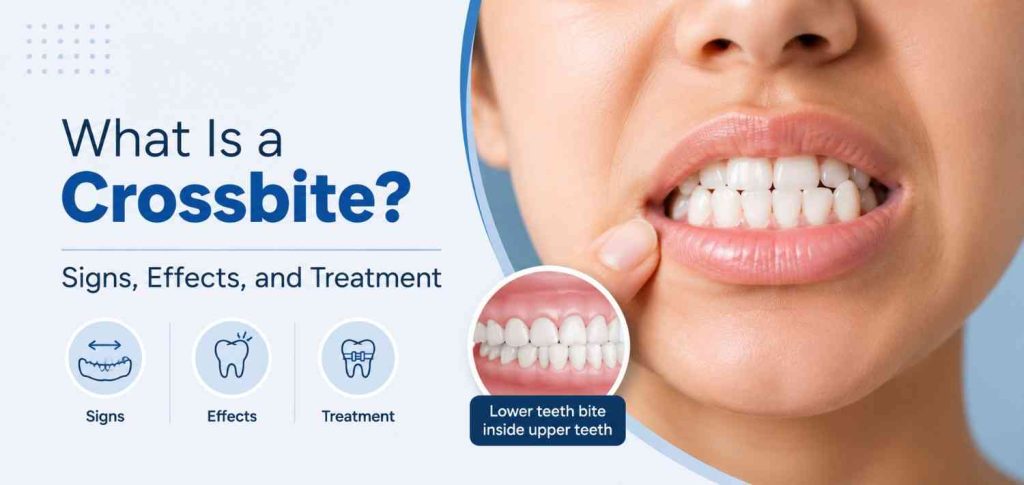
A crossbite occurs when certain upper teeth sit inside the lower teeth instead of resting slightly outside them during biting or chewing. This bite misalignment can affect children, teenagers, and adults, leading to uneven pressure on teeth and jaw structures. Consequently, untreated crossbites may contribute to tooth wear, gum problems, jaw discomfort, and facial asymmetry over time. Some cases involve only one tooth, whereas others affect multiple teeth or the entire jaw alignment. Early diagnosis and proper treatment help improve bite balance, oral function, and long-term dental health while reducing the risk of more serious orthodontic complications later.
Table of Contents
ToggleWhat Is a Crossbite?
A crossbite refers to a type of dental misalignment where upper teeth bite behind lower teeth instead of overlapping them properly. This issue may involve front teeth, back teeth, or both.
Healthy bite alignment usually allows upper teeth to sit slightly outside lower teeth. In contrast, a crossbite disrupts this relationship and creates uneven contact during chewing or speaking.
Crossbites commonly affect:
- Front teeth
- Molars
- One side of the mouth
- Both sides of the mouth
- Single teeth
- Entire jaw sections
The severity varies significantly between patients. Consequently, treatment approaches depend on the type and extent of the bite problem.
Types of Crossbite
Different forms of crossbite affect oral structures in unique ways. Therefore, proper diagnosis becomes essential before treatment planning begins.
Anterior Crossbite
Anterior crossbite affects the front teeth. In this condition, one or more upper front teeth sit behind the lower front teeth.
This form may resemble an underbite in some situations. However, anterior crossbite sometimes involves only individual teeth rather than the entire jaw.
Posterior Crossbite
Posterior crossbite affects the back teeth, including premolars and molars. Consequently, chewing pressure becomes uneven across the mouth.
Posterior crossbites may occur:
- On one side only
- On both sides
- Along several teeth
Jaw shifting during biting often accompanies this condition.
Skeletal vs Dental Crossbite
Some crossbites result from tooth positioning alone, whereas others involve jaw structure differences.
Dental crossbites affect tooth alignment mainly. In contrast, skeletal crossbites involve jaw growth irregularities that may require more advanced treatment approaches.
Common Causes of Crossbite
Several factors may contribute to crossbite development during childhood or adulthood.
Genetics and Jaw Development
Genetics strongly influence jaw shape and tooth alignment. Consequently, inherited jaw size differences often contribute to crossbite formation.
Children may inherit:
- Narrow upper jaws
- Large lower jaws
- Crowded teeth
- Irregular bite patterns
Family history frequently increases the likelihood of orthodontic issues.
Childhood Habits
Certain habits may influence jaw growth and tooth positioning during early development.
Common contributing habits include:
- Thumb sucking
- Extended pacifier use
- Mouth breathing
- Tongue thrusting
These habits may place pressure on developing teeth and jaw structures over time.
Delayed or Abnormal Tooth Eruption
Baby teeth that fall out too early or too late may disrupt permanent tooth eruption patterns. Consequently, neighboring teeth may shift into improper positions and contribute to bite misalignment.
Dental crowding may also increase crossbite risk significantly.
Signs and Symptoms of Crossbite
Some people recognize crossbite visually, whereas others notice symptoms involving discomfort or chewing difficulty.
Visible Tooth Misalignment
One of the most noticeable signs involves upper teeth sitting inside lower teeth during biting. Consequently, the smile may appear uneven or asymmetrical.
Parents sometimes notice:
- Crooked bite patterns
- Uneven tooth positioning
- Jaw shifting during chewing
- Facial imbalance
Early recognition supports faster orthodontic intervention.
Jaw Discomfort and Pressure
Crossbite may place uneven stress on jaw joints and muscles. Consequently, patients sometimes experience:
- Jaw soreness
- Facial tension
- Clicking sounds
- Headaches
- Chewing discomfort
Symptoms often worsen gradually if the bite remains untreated.
Uneven Tooth Wear
Improper tooth contact creates abnormal pressure during chewing. Consequently, enamel may wear unevenly and increase the risk of cracks or sensitivity later.
Excessive pressure may also weaken specific teeth over time.
Effects of Untreated Crossbite
Ignoring crossbite may lead to long-term oral health complications affecting teeth, gums, and jaw structures.
Gum Recession and Bone Stress
Teeth exposed to excessive pressure may experience gum recession gradually. Consequently, roots may become more vulnerable to sensitivity and decay.
The bone surrounding stressed teeth may also weaken because of uneven force distribution.
Increased Tooth Damage
Crossbite often causes:
- Enamel wear
- Chipped teeth
- Cracks
- Tooth sensitivity
- Bite instability
Consequently, untreated bite issues may eventually require restorative dental treatment.
Jaw Joint Problems
Long-term bite imbalance may strain jaw joints and muscles significantly. Some patients develop temporomandibular joint discomfort, commonly called TMJ problems.
Symptoms may include:
- Jaw clicking
- Limited jaw movement
- Facial pain
- Chronic tension
Early treatment often reduces the risk of worsening joint complications.
How Crossbite Affects Children?
Crossbite commonly develops during childhood while the jaw and teeth continue growing. Consequently, early evaluation becomes extremely important.
Growth Changes During Development
Children’s jawbones remain more adaptable than adult bones. Therefore, orthodontic correction often becomes easier during early growth stages.
Treating crossbite early may help:
- Improve jaw symmetry
- Prevent uneven growth
- Reduce tooth wear
- Support healthier chewing patterns
Delayed treatment may allow jaw shifts to become more pronounced later.
Speech and Chewing Difficulties
Some children with crossbite experience speech challenges or chewing discomfort. Consequently, eating habits and communication may become affected gradually.
Early orthodontic care may improve both function and comfort significantly.
Diagnosing a Crossbite
Dental professionals use several methods to evaluate bite alignment and determine the severity of crossbite.
Clinical Examination
Dentists examine tooth positioning, jaw movement, facial symmetry, and bite contact during routine evaluations.
Several areas receive attention:
- Tooth overlap
- Jaw shifting
- Bite balance
- Wear patterns
- Facial structure
Physical examination often reveals visible signs quickly.
X-Rays and Digital Imaging
X-rays and digital scans provide detailed views of teeth, jawbones, and developing structures. Consequently, imaging helps identify skeletal concerns and tooth positioning problems more accurately.
Treatment planning becomes more precise with proper diagnostic information.
Crossbite Treatment Options
Treatment depends on age, severity, and whether the issue involves teeth, jaw structures, or both.
Braces
Traditional braces remain one of the most common crossbite treatments. Brackets and wires gradually move teeth into healthier positions over time.
Braces may help correct:
- Tooth crowding
- Bite imbalance
- Tooth rotation
- Jaw alignment issues
Treatment duration varies according to case complexity.
Clear Aligners
Some mild to moderate crossbites respond well to clear aligner therapy. Consequently, removable aligners may provide a less visible orthodontic option for appropriate candidates.
However, severe skeletal crossbites may require more advanced treatment methods.
Palatal Expanders
Children with narrow upper jaws sometimes benefit from palatal expanders. These devices gradually widen the upper jaw and improve bite alignment.
Expansion treatment often works most effectively during active growth periods.
Tooth Extraction in Certain Cases
Severe crowding occasionally requires tooth extraction before orthodontic correction begins. Removing selected teeth may create space for proper alignment.
Dentists evaluate spacing carefully before recommending extraction treatment.
Surgical Treatment for Severe Crossbite
Some severe skeletal crossbites may not respond fully to orthodontic appliances alone. Consequently, jaw surgery may become necessary in certain adult cases.
When Surgery Becomes Necessary
Surgical correction may help patients with:
- Significant jaw asymmetry
- Severe bite imbalance
- Advanced skeletal discrepancies
- Functional chewing problems
Orthodontic treatment often occurs before and after surgery for optimal alignment.
Goals of Surgical Correction
Surgery aims to improve:
- Bite function
- Jaw balance
- Facial symmetry
- Chewing efficiency
- Speech clarity
Recovery time varies depending on procedure complexity and healing response.
Importance of Early Treatment
Early intervention frequently simplifies crossbite correction and reduces long-term complications.
Early Care May Prevent Future Problems
Treating crossbite during childhood may help avoid:
- Severe jaw imbalance
- Excessive tooth wear
- Gum recession
- TMJ complications
- Facial asymmetry
Consequently, orthodontic evaluation during early development remains highly beneficial.
Adults Still Benefit From Treatment
Although early treatment offers advantages, adults can still achieve successful correction. Modern orthodontic options continue to improve treatment flexibility and aesthetics for older patients.
Consistent treatment planning supports healthier long-term outcomes regardless of age.
Oral Hygiene During Crossbite Treatment
Proper oral hygiene remains extremely important throughout orthodontic treatment because appliances may trap food particles and plaque.
Brushing and Flossing Carefully
Patients should maintain:
- Twice-daily brushing
- Daily flossing
- Regular dental cleanings
- Fluoride toothpaste use
Orthodontic appliances increase plaque accumulation risk if cleaning becomes inconsistent.
Protecting Teeth During Treatment
Poor hygiene during treatment may contribute to:
- Cavities
- Gum inflammation
- White spot lesions
- Bad breath
Consequently, careful oral care supports healthier orthodontic outcomes and stronger enamel protection.
Lifestyle Adjustments During Treatment
Crossbite treatment may require temporary lifestyle changes involving eating habits and oral care routines.
Patients wearing braces or expanders may need to avoid:
- Sticky foods
- Hard candy
- Ice chewing
- Popcorn
- Gum
Soft foods often feel more comfortable after orthodontic adjustments. Moreover, regular appliance care helps prevent breakage and treatment delays.
Clear aligner users should also maintain consistent wear schedules for effective tooth movement.
Emotional and Social Effects of Crossbite
Crossbite may affect confidence and social comfort, especially when visible misalignment alters smile appearance or facial balance.
Self-Confidence Concerns
Teenagers and adults sometimes feel self-conscious about:
- Crooked smiles
- Jaw asymmetry
- Speech difficulties
- Visible bite irregularities
Consequently, emotional discomfort may develop alongside physical symptoms.
Improved Confidence After Treatment
Orthodontic correction often improves smile symmetry and bite function significantly. Consequently, many patients experience greater comfort during speaking, smiling, and social interaction after treatment completion.
Balanced expectations remain important throughout the correction process.
Long-Term Maintenance After Crossbite Treatment
Successful crossbite correction requires long-term maintenance to preserve alignment and prevent relapse.
Retainers Support Stability
Retainers help maintain tooth positions after braces or aligner treatment finishes. Consequently, skipping retainer wear may allow teeth to shift gradually over time.
Several retainer types include:
- Clear removable retainers
- Hawley retainers
- Permanent bonded retainers
Dentists recommend schedules based on individual treatment needs.
Ongoing Dental Monitoring Matters
Regular dental examinations help monitor:
- Bite stability
- Tooth wear
- Gum health
- Jaw function
A dentist in Florham Park NJ, may identify early alignment changes before larger problems develop.
Preventing Crossbite Complications
Although genetics influences bite development significantly, several habits may reduce the likelihood of worsening crossbite problems.
Helpful preventive steps include:
- Early orthodontic evaluation
- Limiting thumb sucking
- Treating mouth breathing issues
- Maintaining regular dental visits
- Addressing crowding early
- Encouraging healthy oral habits
Early intervention often prevents minor alignment issues from progressing into more serious skeletal complications later.
Parents should monitor their children’s tooth eruption and jaw development carefully during growth stages. Consequently, timely evaluation may improve treatment efficiency and reduce future orthodontic complexity.
Conclusion
Crossbite represents a common bite misalignment that can affect tooth position, jaw function, facial balance, and overall oral health. Although symptoms may begin mildly, untreated crossbite may eventually contribute to tooth wear, gum recession, jaw discomfort, and chewing difficulties. Consequently, early diagnosis and proper orthodontic treatment remain extremely important for long-term stability and comfort. Braces, aligners, expanders, and surgical correction may all help depending on the severity of the condition. Consistent oral hygiene, regular dental evaluations, and proper retainer use also support healthier results and help maintain improved bite alignment after treatment completion.
FAQs
1. What exactly happens during a crossbite?
A crossbite occurs when the upper teeth sit inside the lower teeth instead of overlapping them properly during biting. Consequently, uneven pressure develops across the teeth and jaw structures. Crossbite may affect front teeth, back teeth, or both, depending on the severity and type of alignment problem present.
2. Can a crossbite correct itself naturally over time?
Mild cases occasionally improve during childhood growth, although most crossbites require professional treatment. Consequently, delaying evaluation may allow alignment problems to worsen gradually. Early orthodontic assessment helps determine whether natural improvement remains possible or whether active correction becomes necessary to prevent future complications and discomfort.
3. Does crossbite always cause pain?
Not every crossbite causes immediate pain, especially during the early stages. However, untreated cases may eventually create jaw discomfort, headaches, tooth wear, or chewing problems. Consequently, even painless crossbites still deserve professional evaluation because long-term complications may develop gradually without obvious warning signs initially appearing.
4. At what age should children receive crossbite evaluation?
Children should receive orthodontic evaluation during early developmental years, especially if parents notice jaw shifting or uneven tooth positioning. Early examination often allows simpler correction while jawbones remain adaptable. Consequently, timely treatment may reduce future orthodontic complexity and support healthier jaw development during growth stages.
5. Can adults still fix a crossbite successfully?
Yes, adults can still achieve successful crossbite correction through braces, aligners, or surgical treatment, depending on severity. However, adult jawbones remain less flexible than children’s bones, which may affect treatment duration. Consequently, individualized planning becomes essential for improving bite alignment and long-term oral function effectively.
6. How long does crossbite treatment usually take?
Treatment time varies according to age, severity, appliance type, and patient compliance. Mild cases may improve relatively quickly, whereas severe skeletal crossbites often require longer orthodontic care. Consequently, professional evaluation remains necessary to estimate treatment duration accurately and determine the most effective correction approach for each patient.
7. Are clear aligners effective for crossbite treatment?
Clear aligners may successfully treat mild to moderate crossbites involving tooth alignment issues. However, severe skeletal crossbites often require braces, expanders, or surgery instead. Consequently, dentists evaluate bite structure carefully before determining whether aligners can provide safe and effective correction for individual orthodontic needs.
8. What problems can an untreated crossbite create later?
Untreated crossbite may lead to uneven tooth wear, gum recession, jaw discomfort, facial asymmetry, tooth fractures, and chewing difficulties. Consequently, prolonged bite imbalance can strain teeth and joints significantly over time. Early treatment often reduces the risk of developing more serious oral health complications later in life.
9. Do braces hurt during crossbite treatment?
Braces may create temporary soreness after adjustments because teeth gradually move into new positions. However, discomfort usually improves within several days. Soft foods and proper oral care often help during adjustment periods. Consequently, most patients adapt successfully while treatment continues, improving bite balance and alignment steadily.
10. Why are retainers important after crossbite correction?
Retainers help maintain corrected tooth positions after orthodontic treatment finishes. Without retainers, teeth may gradually shift back toward previous positions over time. Consequently, consistent retainer wear supports long-term alignment stability and protects the progress achieved during braces, aligner therapy, or other orthodontic correction methods successfully.