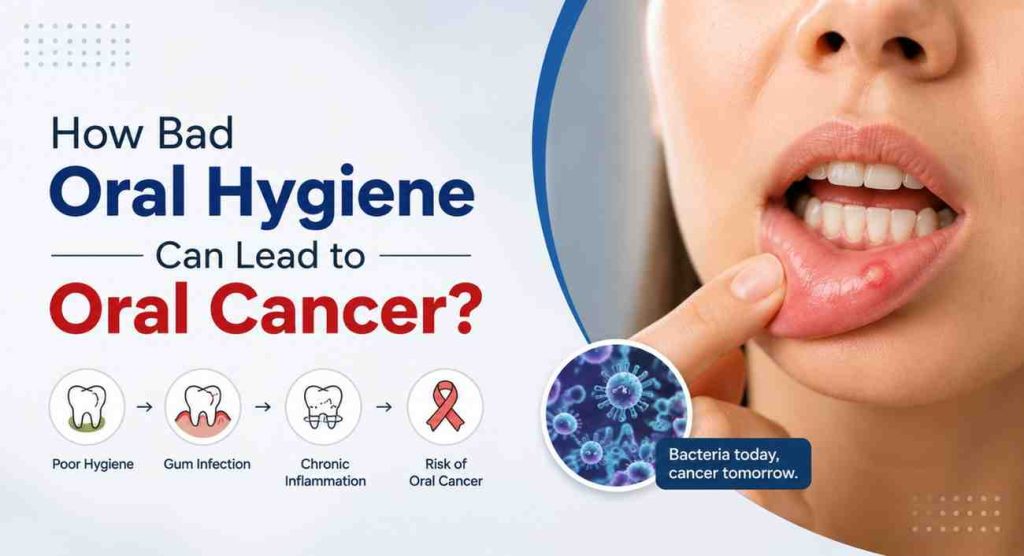
Poor oral hygiene affects far more than teeth and gums. Persistent plaque buildup, untreated infections, and chronic inflammation may contribute to serious health complications, including oral cancer. Although oral cancer develops from multiple risk factors, neglected oral care can create conditions that increase tissue irritation and bacterial activity inside the mouth. Consequently, long-term gum disease, smoking, alcohol use, and delayed dental care may work together to raise cancer risk significantly. Early prevention, regular screenings, and consistent oral hygiene habits play essential roles in protecting oral tissues and supporting overall health throughout different stages of life.
Table of Contents
ToggleWhat Is Oral Cancer?
Oral cancer refers to abnormal cell growth occurring inside the mouth or surrounding areas. It may develop on the tongue, gums, lips, cheeks, roof of the mouth, or throat.
Several symptoms may appear during the early stages, including:
- Persistent mouth sores
- White or red patches
- Difficulty swallowing
- Unexplained bleeding
- Chronic mouth pain
- Loose teeth
- Changes in speech
- Lumps inside the mouth
Early diagnosis greatly improves treatment outcomes. However, many people ignore symptoms until the disease progresses further. Consequently, regular oral examinations remain extremely important for early detection.
How Oral Hygiene Affects Overall Oral Health?
The mouth contains bacteria naturally, yet poor hygiene allows harmful bacteria to multiply excessively. Consequently, plaque accumulation may lead to inflammation, gum disease, infections, and tissue damage.
Daily oral hygiene removes food particles, plaque, and bacteria before they create larger problems. In contrast, neglected oral care allows irritation and bacterial activity to continue for long periods.
Several habits support healthier oral tissues:
- Brushing twice daily
- Flossing consistently
- Cleaning the tongue
- Drinking water regularly
- Attending dental cleanings
- Avoiding tobacco use
Healthy oral tissues recover more effectively from minor irritation and resist infection more efficiently. Therefore, maintaining oral hygiene supports both dental health and tissue protection.
Chronic Inflammation and Oral Cancer Risk
Inflammation represents one of the strongest connections between poor oral hygiene and oral cancer development.
How Inflammation Damages Tissues?
When bacteria remain inside the mouth for long periods, the immune system responds continuously. Consequently, chronic inflammation may damage healthy cells and surrounding tissue structures.
Inflamed gums often appear:
- Red
- Swollen
- Tender
- Prone to bleeding
Long-term irritation may weaken protective tissue barriers and increase abnormal cellular changes over time.
Gum Disease and Persistent Irritation
Advanced gum disease creates deep pockets where bacteria thrive. Consequently, chronic bacterial exposure may prolong inflammation throughout the mouth.
Untreated gum disease may also lead to:
- Bone loss
- Gum recession
- Persistent infection
- Tooth loss
The longer inflammation remains active, the greater the potential tissue damage may become. Therefore, early gum disease treatment remains extremely important.
The Role of Harmful Oral Bacteria
Certain oral bacteria produce toxins and chemicals that may contribute to abnormal tissue changes.
Plaque Buildup Encourages Bacterial Growth
Plaque forms when bacteria combine with food debris and saliva on tooth surfaces. Without regular cleaning, plaque hardens into tartar and becomes more difficult to remove.
Consequently, harmful bacteria continue spreading throughout the gums and soft tissues.
Bacterial Toxins and Cellular Stress
Some bacteria release substances that irritate oral tissues repeatedly. Chronic exposure may increase oxidative stress and interfere with normal cell repair.
Moreover, bacteria associated with gum disease may weaken the body’s natural defense mechanisms inside the mouth. Consequently, damaged tissues may become more vulnerable to abnormal cell development over time.
Tobacco Use and Poor Oral Hygiene
Tobacco remains one of the strongest oral cancer risk factors. However, poor oral hygiene may worsen the harmful effects of smoking and chewing tobacco significantly.
Tobacco Irritates Oral Tissues Constantly
Smoking exposes the mouth to heat, chemicals, and toxins that damage cells directly. Consequently, oral tissues become more vulnerable to cancerous changes.
Chewing tobacco may also create prolonged chemical contact with the gums and cheeks.
Poor Hygiene Increases Tobacco Damage
When tobacco combines with plaque buildup and gum disease, irritation intensifies further. Consequently, bacteria and toxins remain trapped against already damaged tissues.
People who smoke and neglect oral hygiene may experience:
- Severe gum disease
- Tooth loss
- Persistent inflammation
- Delayed healing
- Increased oral cancer risk
Quitting tobacco and improving oral hygiene together may significantly lower future complications.
Alcohol Consumption and Oral Tissue Damage
Excessive alcohol use may also increase oral cancer risk, especially when combined with smoking or neglected oral hygiene.
Alcohol Dries and Irritates the Mouth
Alcohol may reduce saliva production and dry oral tissues. Consequently, bacteria multiply more easily inside the mouth.
Dry tissues also become more vulnerable to irritation and inflammation.
Combined Risk Factors Increase Danger
People who consume alcohol heavily while maintaining poor oral hygiene may face greater tissue damage because bacteria, inflammation, and chemical irritation work together.
Consequently, combined lifestyle risks often create far more harm than any single factor alone.
Delayed Dental Care and Missed Early Detection
Many oral cancer cases become more dangerous because symptoms remain unnoticed during the early stages.
Routine Dental Visits Support Early Identification
Regular dental examinations help identify suspicious tissue changes before symptoms worsen significantly. Dentists often examine:
- Tongue surfaces
- Gums
- Lips
- Cheeks
- Throat tissues
- Mouth floor
Early abnormalities may appear small and painless initially. However, delayed diagnosis allows cancerous changes to progress further.
Poor Oral Hygiene Often Delays Care
People experiencing severe plaque buildup, bleeding gums, or tooth pain sometimes avoid dental visits because of embarrassment or fear. Consequently, early cancer signs may remain undetected for longer periods.
Routine professional evaluation remains essential even when symptoms seem minor.
The Connection Between Tooth Loss and Oral Cancer
Untreated oral disease often leads to tooth loss. Although missing teeth themselves do not cause cancer directly, severe oral deterioration may reflect chronic inflammation and prolonged neglect.
Missing Teeth May Indicate Long-Term Damage
People with extensive tooth loss often experienced years of gum disease, infection, or poor hygiene beforehand. Consequently, surrounding tissues may have endured repeated irritation and bacterial exposure.
Persistent tissue stress may increase vulnerability to abnormal cellular changes over time.
Ill-Fitting Dental Appliances Can Add Irritation
Poorly fitted dentures or damaged dental appliances may rub against oral tissues continuously. Chronic irritation sometimes contributes to tissue damage when left untreated for long periods.
Proper appliance adjustment and routine examinations help reduce unnecessary tissue trauma.
Human Papillomavirus and Oral Cancer
Human papillomavirus, commonly called HPV, also contributes to certain oral cancer cases. Although HPV differs from hygiene-related causes, poor oral health may still influence tissue vulnerability.
Damaged Tissues Become More Sensitive
Inflamed or unhealthy oral tissues may become more susceptible to viral irritation and infection. Consequently, maintaining healthier gums and mucosal surfaces supports stronger natural protection.
Oral Hygiene Supports Immune Defense
Good oral hygiene helps reduce bacterial burden and chronic inflammation inside the mouth. Consequently, healthier tissues may respond more effectively to viral exposure and irritation.
Preventive care supports broader oral health protection beyond cavity prevention alone.
Warning Signs That Should Never Be Ignored
Several oral symptoms require immediate professional evaluation because early treatment significantly improves outcomes.
Important warning signs include:
- Sores lasting longer than two weeks
- White or red mouth patches
- Difficulty chewing
- Persistent sore throat
- Unexplained numbness
- Jaw swelling
- Thickened tissue areas
- Persistent mouth bleeding
Many symptoms initially appear painless. Therefore, waiting for severe pain before seeking care may delay diagnosis unnecessarily.
A dentist in Florham Park NJ, may identify unusual tissue changes during routine examinations before major symptoms develop.
Preventive Habits That Protect Oral Tissues
Preventive care plays a critical role in reducing oral cancer risk and improving overall oral health.
Daily Oral Hygiene Matters
Consistent oral care helps control bacterial growth and inflammation. Important habits include:
- Brushing thoroughly twice daily
- Flossing every day
- Cleaning the tongue
- Using fluoride toothpaste
- Replacing toothbrushes regularly
Healthy hygiene routines support cleaner and less inflamed tissues throughout the mouth.
Lifestyle Changes Reduce Risk
Several lifestyle improvements may help protect oral tissues:
- Avoiding tobacco products
- Limiting alcohol intake
- Drinking sufficient water
- Eating nutritious foods
- Managing stress
- Scheduling regular dental visits
Balanced nutrition also supports stronger immune function and healthier tissue repair processes.
How Nutrition Influences Oral Cancer Risk?
Diet significantly affects oral tissue health because nutrients support healing, immune defense, and inflammation control.
Nutrient Deficiencies May Weaken Oral Tissues
Poor diets lacking vitamins and antioxidants may reduce the body’s ability to repair damaged cells effectively. Consequently, tissues may become more vulnerable to chronic irritation and abnormal cellular changes.
Important nutrients supporting oral health include:
- Vitamin C
- Vitamin A
- Vitamin E
- Zinc
- Calcium
Fruits, vegetables, and water-rich foods often support healthier tissue function naturally.
Sugary Diets Encourage Bacterial Growth
Excess sugar contributes to plaque buildup and bacterial activity. Consequently, poor dietary habits may worsen gum disease and chronic inflammation simultaneously.
Balanced eating habits support both oral health and overall wellness.
Emotional and Physical Effects of Oral Cancer
Oral cancer affects physical health, appearance, speech, eating ability, and emotional well-being significantly.
Physical Challenges During Treatment
Treatment may involve surgery, radiation, or chemotherapy, depending on severity. Consequently, patients sometimes experience:
- Difficulty speaking
- Swallowing discomfort
- Facial changes
- Dry mouth
- Taste alterations
Early diagnosis often reduces the extent of treatment required.
Emotional Impact Can Be Significant
Visible oral conditions may affect self-confidence and social comfort. Moreover, anxiety and emotional stress frequently accompany cancer diagnosis and treatment.
Preventive care and early intervention may help reduce the likelihood of severe complications later.
Why Professional Oral Screenings Matter?
Many people focus only on brushing and flossing while overlooking the importance of professional oral cancer screenings. However, visual examinations performed by dental professionals often identify suspicious changes that patients may never notice independently. Consequently, regular screenings remain an important part of preventive oral healthcare.
During routine examinations, dentists evaluate tissue color, texture, swelling, and unusual growths throughout the mouth. Small abnormalities may appear harmless initially, yet early detection allows faster investigation and treatment when necessary.
Several factors make professional screening especially important:
- Family history of cancer
- Tobacco use
- Heavy alcohol consumption
- Chronic gum disease
- Persistent oral irritation
- HPV exposure
Professional evaluation also helps monitor existing conditions that may increase tissue irritation or inflammation. Consequently, ongoing dental care supports both disease prevention and earlier diagnosis of serious oral health concerns.
Conclusion
Poor oral hygiene may contribute to oral cancer risk by promoting chronic inflammation, bacterial growth, tissue irritation, and delayed diagnosis. Although oral cancer develops through multiple factors, neglected oral care can create conditions that weaken healthy tissues over time. Consequently, smoking, alcohol use, gum disease, and persistent infections may work together to increase damage significantly. Regular brushing, flossing, dental examinations, and healthy lifestyle choices remain essential for protecting oral tissues and supporting early detection. Preventive care not only improves dental health but also helps reduce long-term risks associated with serious oral diseases and tissue complications.
FAQs
1. Can poor oral hygiene directly cause oral cancer?
Poor oral hygiene alone may not directly cause oral cancer, but it can increase risk by promoting chronic inflammation, bacterial growth, and tissue irritation. Consequently, neglected oral health combined with smoking, alcohol use, or infections may create conditions that support abnormal cellular changes over time inside the mouth.
2. Why does chronic gum disease increase oral cancer risk?
Chronic gum disease creates persistent inflammation and bacterial activity around oral tissues. Consequently, prolonged irritation may damage healthy cells and weaken protective tissue barriers. Advanced gum disease also increases infection risk and tissue stress, which may contribute to abnormal cellular changes when left untreated for extended periods.
3. What symptoms of oral cancer should people watch for?
Persistent sores, red or white patches, unexplained bleeding, swallowing difficulty, lumps, numbness, and mouth pain may signal oral cancer. Consequently, symptoms lasting longer than two weeks should receive professional evaluation promptly. Early diagnosis greatly improves treatment outcomes and may reduce the severity of future medical complications significantly.
4. Does smoking increase oral cancer risk more with poor hygiene?
Yes, smoking combined with poor oral hygiene increases tissue irritation significantly. Tobacco chemicals damage oral tissues directly, while plaque and gum disease add further inflammation and bacterial exposure. Consequently, these combined factors may increase oral cancer risk much more than smoking or poor hygiene alone in many individuals.
5. Can regular dental visits help prevent oral cancer?
Routine dental visits support early detection of suspicious tissue changes before major symptoms appear. Dentists examine the mouth carefully for sores, discoloration, swelling, and abnormal growths. Consequently, regular screenings improve the chances of identifying oral cancer early, which often leads to more successful treatment and recovery outcomes.
6. Does dry mouth affect oral cancer risk?
Dry mouth may increase bacterial growth and tissue irritation because saliva normally helps protect oral tissues and control bacteria. Consequently, persistent dryness may contribute to inflammation and discomfort inside the mouth. Addressing hydration, medications, and oral hygiene habits can help improve tissue protection and oral comfort over time.
7. How does alcohol affect oral tissues?
Excessive alcohol may irritate oral tissues and reduce saliva production, which allows bacteria to multiply more easily. Consequently, chronic alcohol use combined with smoking or poor oral hygiene may increase tissue damage significantly. Long-term irritation and dryness may contribute to higher oral cancer risk in vulnerable individuals.
8. Are mouth sores always a sign of oral cancer?
Most mouth sores result from minor irritation or temporary injury rather than cancer. However, sores lasting longer than two weeks require professional evaluation. Consequently, persistent lesions, especially those accompanied by swelling or bleeding, should never remain ignored because early diagnosis greatly improves treatment success and long-term outcomes.
9. Can healthy eating habits lower oral cancer risk?
Balanced nutrition supports stronger immune function, tissue repair, and inflammation control throughout the body. Fruits, vegetables, vitamins, and antioxidants may help protect oral tissues from chronic damage. Consequently, healthier dietary habits often support lower oral disease risk and improved overall wellness when combined with proper oral hygiene practices.
10. Why are oral cancer screenings important even without symptoms?
Early oral cancer often develops without pain or noticeable discomfort. Consequently, patients may not recognize abnormal tissue changes independently. Professional screenings help identify subtle warning signs before symptoms worsen. Regular examinations improve early diagnosis opportunities and may reduce the severity of treatment required if cancer develops later.