

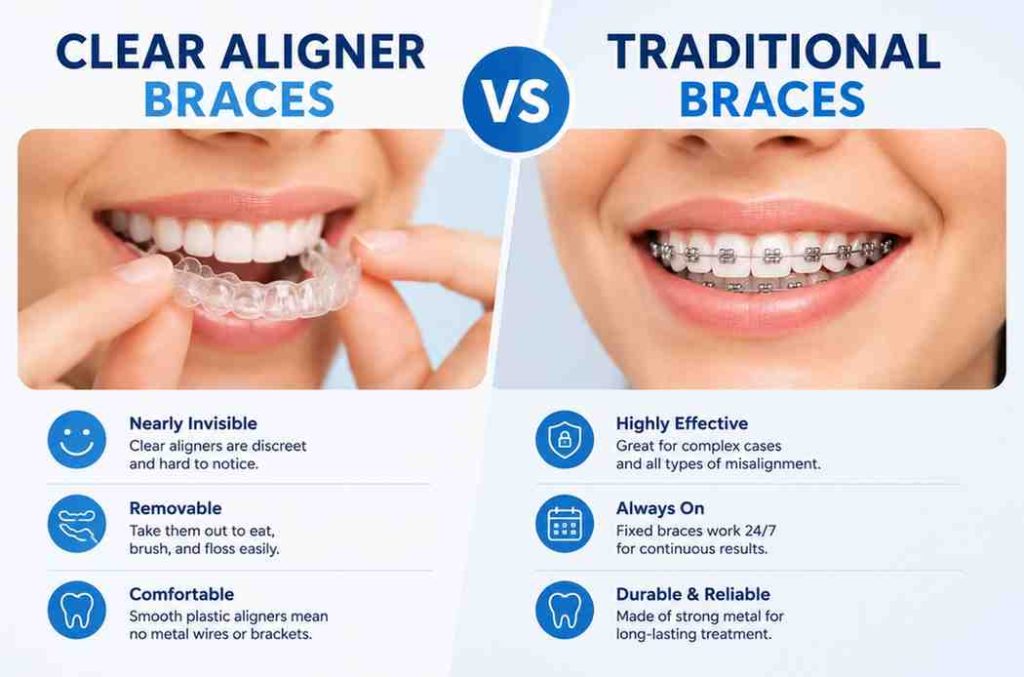
Choosing between clear aligners and traditional braces can feel challenging for many people seeking straighter teeth and a healthier smile. Both treatments improve alignment, bite function, and oral health, yet they differ in comfort, appearance, maintenance, and treatment style. Consequently, patients often compare flexibility, cost, visibility, and effectiveness before making a decision. Some people prefer removable aligners for convenience, whereas others benefit more from fixed braces that handle complex corrections. Careful evaluation of lifestyle, dental condition, and treatment goals helps determine which option offers the best long-term results and daily comfort.
Table of Contents
ToggleHow Clear Aligners Work?
Clear aligners use custom-made plastic trays that gradually shift teeth into better positions. Patients wear each set for approximately one to two weeks before changing to the next series. Moreover, aligners fit closely over teeth, creating a discreet appearance that many adults and teenagers appreciate.
Orthodontic professionals design aligners through digital imaging and treatment planning software. Consequently, patients often see projected movement patterns before treatment even begins. Because the trays remain removable, users can eat, brush, and floss without major restrictions.
However, successful treatment depends heavily on discipline. Most providers recommend wearing aligners for at least twenty-two hours daily. Removing them too often may slow progress and reduce effectiveness. Therefore, commitment plays a major role in treatment success.
How Traditional Braces Work?
Traditional braces use metal or ceramic brackets attached directly to the teeth. Wires connect the brackets and apply controlled pressure that gradually shifts teeth into proper alignment. Consequently, braces remain highly effective for both mild and severe orthodontic problems.
Unlike removable aligners, braces stay fixed throughout treatment. This constant pressure allows precise control over tooth movement. Moreover, orthodontists can adjust the wires regularly to improve bite correction and alignment accuracy.
Braces may include rubber bands, springs, or additional components depending on the patient’s condition. Although many people associate braces with teenagers, adults also choose this treatment for long-term correction. In contrast to aligners, braces do not rely heavily on patient compliance because they remain attached continuously.
Appearance and Confidence During Treatment
Appearance strongly influences orthodontic decisions, especially among adults working in professional environments or students concerned about social confidence.
Clear Aligners and Discreet Treatment
Clear aligners remain nearly invisible during daily activities. Consequently, many people feel more comfortable speaking, smiling, and attending social events while wearing them. Photographs and professional meetings also become less stressful for image-conscious individuals.
Because aligners lack wires and brackets, they create a cleaner appearance overall. Moreover, patients can remove them briefly for important events if necessary. However, frequent removal may affect treatment progress.
Traditional Braces and Visible Hardware
Traditional braces remain more noticeable, particularly metal versions. Nevertheless, modern braces appear smaller and less bulky than older designs. Ceramic braces also provide a less visible alternative for some patients.
Many younger patients accept braces comfortably because orthodontic treatment has become common. In contrast, some adults may feel self-conscious during professional interactions. Personal comfort with visibility often shapes the final decision.
Comfort and Daily Wear
Comfort levels vary significantly between aligners and braces because each treatment applies pressure differently.
Clear aligners usually feature smooth plastic surfaces that reduce irritation inside the cheeks and lips. Consequently, many patients report less discomfort during daily wear. However, aligners still create pressure whenever trays change because tooth movement continues gradually.
Traditional braces may irritate soft tissues, especially after adjustments. Wires and brackets sometimes rub against the cheeks or gums, causing soreness. Orthodontic wax often helps reduce irritation temporarily.
Eating habits also influence comfort. Braces can trap food around brackets, whereas aligners allow normal eating after removal. Nevertheless, aligner users must clean their teeth carefully before reinserting trays to avoid staining and bacterial buildup.
Speech changes may occur temporarily with both treatments. Most patients adjust within several days as the mouth adapts to the appliances.
Effectiveness for Different Dental Problems
Orthodontic treatment should match the severity and complexity of each patient’s dental condition. Consequently, effectiveness often becomes the most important factor when choosing between braces and aligners.
Cases Suitable for Clear Aligners
Clear aligners often work well for:
- Mild crowding
- Small gaps between teeth
- Minor bite correction
- Slight tooth rotations
- Relapse after previous orthodontic treatment
Aligners continue improving through technological advances. Therefore, some moderate orthodontic cases now respond successfully to clear tray systems. However, patient cooperation remains essential throughout treatment.
Cases Better Treated With Traditional Braces
Traditional braces generally provide stronger control for:
- Severe crowding
- Significant bite problems
- Major tooth rotation
- Vertical alignment concerns
- Complex jaw positioning issues
Because braces apply continuous pressure, orthodontists can make precise adjustments more easily. Consequently, complicated cases often achieve more predictable results with braces than with removable aligners.
Cleaning and Oral Hygiene
Oral hygiene affects both treatment success and long-term dental health. Therefore, patients should compare cleaning requirements carefully before selecting an orthodontic option.
Cleaning With Clear Aligners
Clear aligners simplify brushing and flossing because patients remove the trays during oral care routines. Consequently, maintaining healthy gums and clean teeth often becomes easier.
Patients should also clean the trays daily to prevent odors and discoloration. Recommended cleaning methods include:
- Gentle brushing with mild soap
- Rinsing after meals
- Using approved cleaning crystals
- Avoiding hot water exposure
However, neglecting tray cleaning may increase bacteria accumulation and unpleasant smells.
Cleaning With Traditional Braces
Braces require extra effort because food particles can collect around brackets and wires. Consequently, patients often need specialized floss threaders, interdental brushes, or water flossers.
Poor cleaning during braces treatment may lead to:
- Plaque buildup
- Gum inflammation
- Tooth discoloration
- Cavities near brackets
Regular hygiene appointments and careful brushing routines help reduce these risks significantly.
Food Restrictions and Lifestyle Changes
Lifestyle habits frequently influence orthodontic treatment satisfaction. Therefore, comparing daily restrictions becomes important before committing to either option.
Clear aligners offer greater dietary freedom because patients remove them before eating. Consequently, users can continue enjoying crunchy fruits, popcorn, nuts, and chewy foods without damaging appliances.
However, aligner users must avoid drinking sugary or colored beverages while wearing trays. Dark liquids may stain the plastic and increase bacterial growth. Water remains the safest option during wear.
Traditional braces involve more dietary restrictions because hard or sticky foods may damage brackets and wires. Patients often avoid:
- Caramel
- Chewing gum
- Hard candy
- Ice
- Crunchy chips
Although these limitations feel inconvenient initially, many patients adapt their eating habits successfully over time.
Treatment Length and Appointment Frequency
Treatment duration varies according to the complexity of the dental problem, patient compliance, and overall oral health.
Clear aligner treatment often lasts between twelve and twenty-four months for mild to moderate cases. However, skipped wear time may extend the process considerably. Regular tray changes and consistent use support faster progress.
Traditional braces commonly remain in place for eighteen months to three years. Severe bite correction may require additional time. Nevertheless, braces continue working continuously because patients cannot remove them.
Appointment schedules also differ slightly. Aligners may require fewer office visits because patients switch trays at home. In contrast, braces usually require adjustment appointments every few weeks.
A dentist in Florham Park NJ, may recommend one option over another after evaluating tooth position, jaw alignment, and lifestyle factors.
Cost Considerations
Cost often influences orthodontic decisions because treatment may require a substantial financial commitment. Consequently, patients should review all potential expenses before beginning care.
Several factors affect pricing, including:
- Case complexity
- Treatment duration
- Material type
- Geographic location
- Follow-up care needs
Clear aligners sometimes cost more than traditional metal braces because of digital planning technology and custom tray production. However, pricing differences vary significantly among providers.
Traditional metal braces generally remain one of the most affordable orthodontic solutions. Ceramic braces may increase costs because of their less visible appearance.
Insurance coverage may help reduce expenses for either treatment. Moreover, many practices offer payment plans that spread costs over several months.
Discipline and Patient Responsibility
Patient responsibility strongly affects clear aligner success. Because aligners remain removable, users must follow instructions carefully throughout treatment.
Important responsibilities include:
- Wearing trays consistently
- Cleaning aligners properly
- Avoiding tray loss
- Changing aligners on schedule
- Attending follow-up appointments
Failure to follow instructions may delay progress and compromise final results. Consequently, aligners work best for disciplined individuals who maintain structured routines.
Traditional braces require less active cooperation because they remain fixed in place. However, patients must still maintain proper hygiene and avoid damaging foods. Therefore, both systems require commitment, although aligners depend more heavily on daily self-management.
Suitability for Teenagers and Adults
Both teenagers and adults benefit from orthodontic treatment, although priorities often differ between age groups.
Teenagers frequently choose braces because parents appreciate their effectiveness and lower dependence on compliance. Moreover, braces eliminate concerns about losing removable trays during school or sports activities.
Adults often prefer clear aligners because of their subtle appearance and flexible lifestyle benefits. Professional environments sometimes encourage discreet treatment options that minimize visibility during meetings and social interactions.
However, treatment choice should depend more on dental needs than age alone. Consequently, orthodontic evaluations remain essential before selecting any appliance.
Sports and Physical Activities
Active individuals should consider how orthodontic treatment may affect sports participation and physical comfort.
Clear aligners provide smoother surfaces that reduce the risk of cuts inside the mouth during contact sports. Moreover, athletes can remove trays temporarily while wearing protective mouthguards.
Traditional braces may increase the risk of soft tissue irritation after impacts. Therefore, athletes wearing braces should use orthodontic mouthguards for additional protection.
Musicians who play wind instruments may also notice differences in comfort. Some brace wearers experience temporary lip irritation, whereas aligners generally interfere less with instrument positioning.
Long-Term Results and Retainers
Both aligners and braces can deliver excellent long-term results when patients follow retention instructions after treatment ends.
Teeth naturally shift over time. Consequently, retainers help preserve corrected alignment and prevent relapse. Patients usually wear retainers nightly after completing active treatment.
Retainer options include:
- Clear removable retainers
- Hawley retainers
- Permanent bonded retainers
Neglecting retainer use may gradually reverse orthodontic improvements regardless of the original treatment method. Therefore, retention remains an essential part of maintaining results.
Conclusion
Clear aligners and traditional braces each provide valuable orthodontic benefits, yet the best choice depends on dental needs, lifestyle habits, appearance preferences, and treatment goals. Aligners offer flexibility and a subtle appearance, whereas braces deliver strong control for complex corrections. Consequently, careful evaluation with a qualified dental professional helps patients choose the most suitable option. Consistent oral hygiene, regular appointments, and proper retainer use remain essential regardless of treatment style. A balanced decision supports healthier alignment, improved confidence, and long-lasting oral function for patients of different ages and orthodontic needs.
FAQs
1. Are clear aligners painful to wear?
Clear aligners may create mild pressure whenever patients switch to a new tray. However, most people describe the discomfort as manageable and temporary. Smooth plastic surfaces also reduce irritation inside the mouth. Consistent wear usually helps patients adapt more comfortably throughout treatment and maintain steady tooth movement.
2. Can adults wear traditional braces successfully?
Adults frequently choose traditional braces for complex alignment problems and bite correction. Braces provide reliable control over tooth movement regardless of age. Moreover, modern designs appear smaller and more comfortable than older versions. Many adults achieve strong orthodontic results through properly managed braces treatment and routine follow-up care.
3. Do clear aligners work faster than braces?
Treatment speed depends largely on case complexity and patient compliance. Mild cases may respond quickly to aligners, whereas severe conditions often require braces for predictable movement. Wearing aligners inconsistently may extend treatment time significantly. Consequently, no single option guarantees faster results for every patient or dental condition.
4. Which option requires fewer office visits?
Clear aligners often require fewer appointments because patients switch trays independently at home. Traditional braces typically need more frequent adjustments and monitoring visits. However, both treatments still require professional supervision to track progress, address concerns, and ensure that teeth move according to the planned correction process.
5. Can braces fix severe bite problems better than aligners?
Traditional braces generally provide stronger control for severe crowding, complex bite correction, and difficult tooth movement. Consequently, orthodontists often recommend braces for advanced cases requiring detailed adjustments. Aligners continue improving technologically, yet braces still remain highly effective for challenging structural corrections and significant alignment problems.
6. Are clear aligners easier to clean than braces?
Yes, aligners simplify cleaning because patients remove them during brushing and flossing. In contrast, braces require careful cleaning around brackets and wires. However, aligners also need regular cleaning to prevent odors and stains. Proper oral hygiene remains essential regardless of which orthodontic system patients choose for treatment.
7. What foods should people avoid with braces?
Patients with braces should avoid sticky, hard, or crunchy foods that may damage wires and brackets. Common examples include caramel, chewing gum, ice, and hard candy. Softer foods usually reduce appliance damage and discomfort. Consequently, dietary adjustments play an important role throughout braces treatment and maintenance.
8. Can aligners fall out during daily activities?
Properly fitted aligners usually stay secure during speaking and routine activities. However, patients should remove them before meals and store them safely to prevent loss or damage. Consistent wear also improves tray fit over time. Consequently, aligners rarely fall out unexpectedly when used according to instructions.
9. Do braces or aligners affect speech more?
Both options may temporarily affect speech while the mouth adjusts to the appliance. Some aligner users notice a slight lisp initially, whereas braces may create minor tongue irritation. Most patients adapt within several days. Continued speaking and consistent appliance use usually improve speech comfort quickly and naturally.
10. Which option offers a better appearance during treatment?
Clear aligners generally provide the most discreet appearance because transparent trays remain difficult to notice during conversations and photographs. Traditional braces appear more visible, especially metal versions. However, ceramic braces offer a less noticeable alternative. Personal preference and treatment needs often determine which appearance feels more comfortable.